Measuring Mobile Billboard Results: Hong Kong Cases and the Source of the 97% Recall Claim
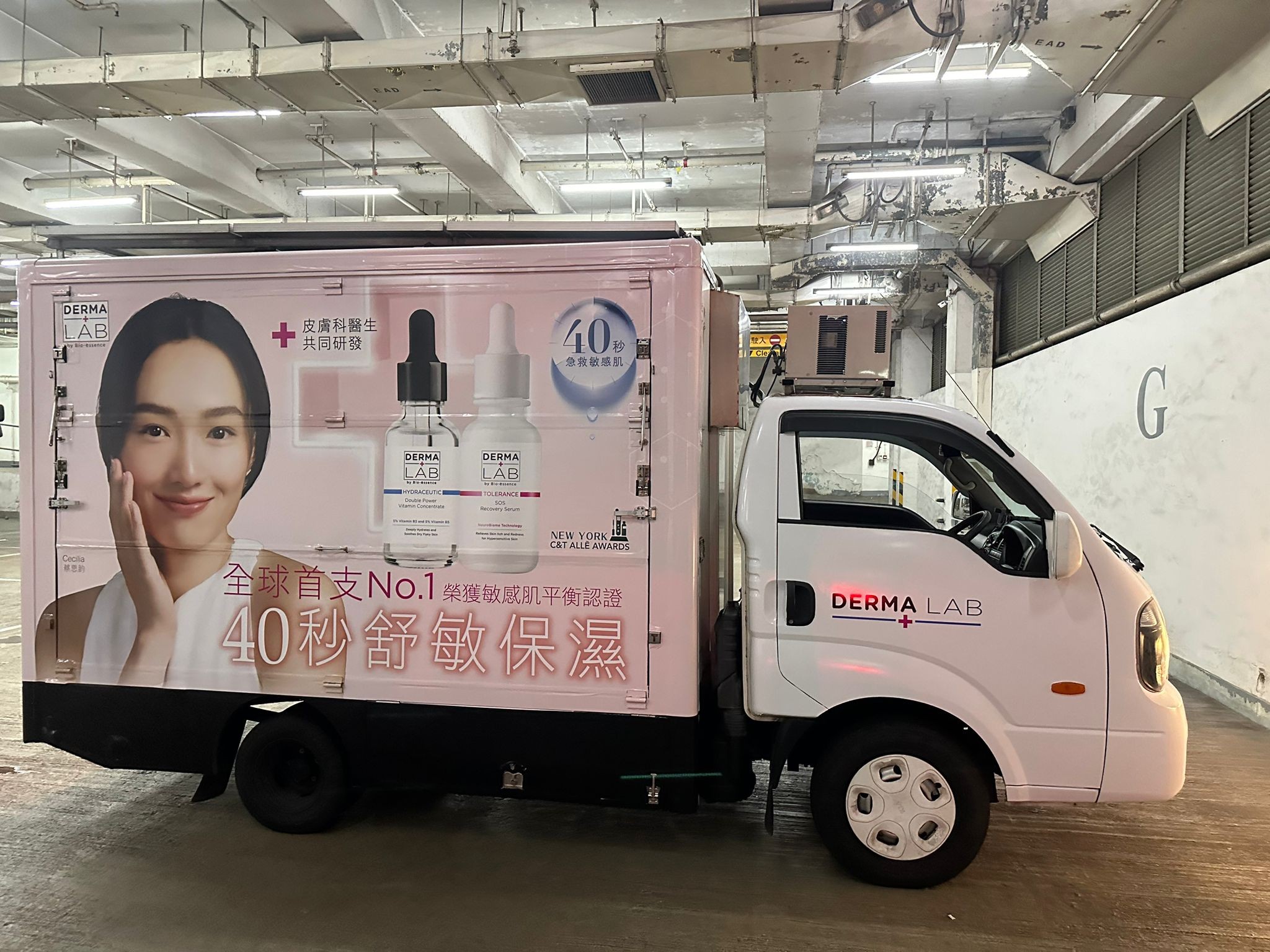
Search for advertising truck effectiveness in Hong Kong and “97% recall” appears repeatedly, often without its origin. The cited source is research by the Transportation Advertising Council of America, reported in Outdoor Advertising magazine in July 2002.That is US market data from more than 20 years ago. This article traces the frequently repeated figures before examining publicly documented Hong Kong examples.
1. A figure repeated for more than two decades
Where does “97% recall” come from?
The figure appears on many Chinese- and English-language advertising-truck websites, with the following cited origin.Transportation Advertising Council of America research reported in the July 2002 issue of Outdoor Advertising stated 97% message recall for outdoor mobile billboards, and that 96% of respondents considered mobile advertising more effective than traditional outdoor formats.Another frequently paired claim comes from RYP & Becker Group: 97% message recall for vehicle marketing versus 19% retention for static signs.
Sources of other common figures
| Common claim | Attributed research organisation | Reported finding |
|---|---|---|
| 97% recall | Transportation Advertising Council of America (Outdoor Advertising, July 2002) / RYP & Becker Group | 97% mobile billboard message recall; 96% considered it more effective than traditional outdoor advertising; comparison with 19% static-sign retention |
| 94% recalled seeing it; 80% remembered the specific advert | Product Acceptance and Research, Inc. (Washington, DC) | Beer-industry study: 43% static billboard recall versus 94% mobile recall, with 80% remembering the specific advert |
| 107% sales growth | Product Acceptance and Research, Inc. | The same beer-industry study reported 54% sales growth for static billboards and 107% for mobile billboards |
| 91% noticed vehicle text and graphics | American Trucking Association | 91% of the target audience noticed truck-advertising text and graphics |
| One to four million monthly impressions | Traffic Audit Bureau | Reported monthly exposure units on local routes ranged from one to four million |
Why these figures do not transfer directly to Hong Kong in 2026
Three reasons. First, date: core figures come from around 2002, before widespread smartphone use changed attention on the street. Second, market: the US setting has wider roads, more car travel, higher speeds and lower billboard density. Hong Kong is a dense walking city with narrow streets and saturated advertising. Third, method: samples, questionnaires and definitions of recall are not publicly standardised, and Hong Kong lacks a shared public OOH audience audit system comparable to the UK's Route or US Geopath.
These figures can inform discussion of the potential advantages of moving displays, but should not support budget forecasts or performance guarantees.If a supplier promises a recall rate or sales increase, ask which year, market and measurement method it comes from. For cross-media cost comparisons, see Mobile Billboards vs Bus, MTR Lightbox, Tram and Taxi Advertising: Costs and ROI。
What remains useful in the research
One comparison remains informative: within the same study, reported recall was 43% for static billboards and 94% for mobile billboards. The useful question is whether movement helps attract attention and memory, rather than treating 97% as a universal result. This is the underlying rationale for mobile advertising.
2. Public Hong Kong case studies
Attribution: These examples come from third-party public materials. The organiser or supplier is identified for each; they are not PEAKVEIN client projects. They illustrate replicable methods and measurement approaches.
Case 1: HK Express advertising truck (RoadAds)
| Industry | Airlines and travel |
|---|---|
| Approach | The vehicle used the airline's purple branding, aircraft imagery and a journey-themed slogan. Stops in Central, Causeway Bay and Tsim Sha Tsui included staff distributing luggage tags, travel booklets and promotion codes. A photo area and destination quiz offered opportunities to win flight vouchers, with routes covering commercial and residential peak periods. |
| Publicly described results | The campaign attracted attention along its route and further sharing on social media. Residents reportedly found the creative and gifts memorable, while photo-spot participants shared images online. |
Replicable mechanism: The useful feature is linking gifts to questions : answering destination questions made the voucher interaction carry a message and provide participation data. For suitable vehicles, see LED advertising truck and Mobile showroom truck。
Case 2: Manulife VHIS advertising truck (RoadAds): a public example with specific figures
| Industry | Insurance |
|---|---|
| Reported figures | The vehicle visited over 40 key locations and directly reached more than 30,000 residents; over 6,000 people joined on-site activities, of whom 35% expressed interest in learning more about and purchasing a VHIS plan |
| Publicly described results | The public account describes increased brand and plan visibility, greater participation and an improved perception of the brand's concern for public health. |
Why these figures deserve attention: They describe countable direct contacts. Using the reported round figures, 6,000 participants from 30,000 contacts suggests about 20% participation; 35% of 6,000 is about 2,100 expressions of interest.This funnel offers a more useful way to present campaign results than estimating everything from passing footfall. Interest is a separate step from an actual purchase. For finance and insurance deployment, see Mobile Promotion Across 10 Industries。
Case 3: The Body Shop mobile shop (RoadAds)
| Industry | Personal care and retail |
|---|---|
| Approach | The truck became a miniature shop with product shelving, a trial area and checkout equipment. Classic green branding and natural imagery supported the environmental message. It visited Causeway Bay, Central and Mong Kok, with brief residential stops. |
Replicable mechanism: A three-part route approach: shopping districts for visibility, residential areas for trials and conversion, and consistent vehicle branding throughout. Opening display space and power are essential.
Case 4: Jockey Club SMART Family-Link multimedia promotional vehicles
| Campaign type | Community and charitable outreach |
|---|---|
| Approach | Multimedia vehicles toured Hong Kong to promote family well-being and healthy family functioning, help Integrated Family Service Centres reach new groups, and introduce mobile apps developed by the project team. |
| Execution records | The project ran in several rounds, including 28 October–19 November 2021 and 25 November–11 December 2024, with community stops such as Roman Square at Tin Shui Estate, Tin Shui Wai, Yuen Long. |
Replicable mechanism: Repeated rounds over several years build community familiarity beyond a single burst. Commercial brands can likewise use a predictable timetable for long-term neighbourhood outreach.
Case 5: STAND BY YOU Kids' FUN Ice Cream Truck (Hong Kong Family Welfare Society × Jockey Club SMART Family-Link Project)
| Campaign type | Community outreach and positive parenting |
|---|---|
| Execution records | From 1–20 September 2025, the vehicle distributed ice cream cups at 12 locations: Shun Lee Estate, Lai Kok Estate, Kwai Chung Plaza, Harbour North, On Tai Estate, Hoi Lai Estate, Kwai Fong Estate, Choi Ming Court, Yau Lai Estate, Yau Tong Estate, City Garden Road and Kin Ming Estate, spending about four hours at each. |
| Participation mechanism | Visitors scanned an on-site QR code, answered two questions, showed a screenshot for stamps on a redemption card and exchanged the required stamps for ice cream. |
Replicable mechanism: This is the most fully developed participation mechanism among the five examples: scanning, answering and collecting stamps attracts attention, communicates the message, records interaction and produces countable participation.It measures engagement with the message, beyond the number of gifts distributed.
Shared principles across the five examples
- Interaction is part of the experience.Questions, scans, trials and stamps go beyond simply driving past.
- Routes have distinct roles.Commercial areas build visibility; residential stops enable direct contact.
- One visual system runs throughout.Consistent colours, slogans and imagery allow encounters in different places to build the same impression.
- Results favour countable measures.The example with specific figures uses contacts, participants and expressed interest rather than estimated impressions.
3. PEAKVEIN's publicly shown brand and vehicle pairings
The following service records are already displayed on our website, grouped by vehicle. Project delivery, routes and available results can be discussed during consultation.
| Vehicle type | Brand served | Application |
|---|---|---|
| Mobile showroom / exhibition truck | Yakult (family pack) | Product display and mobile exhibition |
| Mobile showroom truck | Coca-Cola | Brand promotion |
| LED advertising truck | Asian Games-themed promotion | Major sporting-event promotion |
| Stage truck / exhibition truck | Bright Smart Securities | Financial brand event |
| Mini vintage promotional van | Sun Life | Brand-image community outreach |
| T2 pop-top van | FWD MAX | Fixed-location decorative display |
| Mini promotional truck | Kohler | Product promotion |
We have close to ten years of promotional-vehicle event experience and continue expanding our range to support clients' products and services across Hong Kong's 18 districts. Our self-owned, self-designed fleet includes mobile showrooms, T2 pop-top vans, mini vintage vans, LED advertising trucks, mini promotional trucks and stage trucks. Services include event planning, vehicle graphic design/production/installation, and event staff recruitment and management. See About us and Our services。
4. A four-level measurement framework
The most useful lesson is how to measure. Work through these levels from directly verifiable delivery to measures requiring more assumptions.
Level 1 | Delivery: directly verifiable
Record actual roads, times, stop durations and content playlists. Request route logs and on-site photos/video; some fleets use real-time GPS throughout their vehicles for location and traffic records.This verifies whether the agreed activity was delivered and should form part of the contract's delivery requirements.
Level 2 | On-site activity: countable
Count contacts, participants, giveaways and QR scans. The Manulife example reports over 40 locations, 30,000 contacts and 6,000 participants, with 35% expressing purchase interest. This requires an interaction mechanism; pure touring cannot generate equivalent on-site counts.
Level 3 | Attribution: trackable
Use a dedicated QR code, truck-only promotion code, short URL or phone number. Match responses to campaign time slots and use them to improve routes, giving more time to sections generating stronger response.Setup can cost very little, yet many campaigns omit it.
Level 4 | Exposure: estimated
Reach and CPM depend on assumptions about footfall data, repeated contacts and obstructed views.Hong Kong has no shared publicly audited OOH impression standard, so supplier figures may not be comparable.State assumptions and keep them consistent throughout the campaign; apply the same assumptions to each medium in a cross-media comparison.
Business outcomes require a separate baseline
Compare store visits, direct website traffic, brand searches and sales against an equal pre-campaign period or branches without the campaign. Outdoor advertising response can lag by one or two weeks, so continue observing for about 14 days after the campaign before drawing conclusions.
5. Frequently asked questions
Do mobile billboards really achieve 97% recall?
The figure has a cited source, but it is not Hong Kong data. Transportation Advertising Council of America research reported in Outdoor Advertising in July 2002 stated 97% recall and 96% believing mobile advertising more effective than traditional outdoor formats. RYP & Becker Group also reported 97% versus 19% static-sign retention. The research is old, US-based and not publicly standardised in method; Hong Kong's density, advertising saturation and attention environment differ. It can illustrate a possible advantage of movement, not a budget assumption or result guarantee.
Is the claim of 107% sales growth true?
It is attributed to a beer-industry study by Product Acceptance and Research, Inc. in Washington, DC: 43% static versus 94% mobile billboard recall, with 80% remembering the specific advert, and 54% versus 107% sales growth. One industry and market more than two decades ago cannot predict results across Hong Kong sectors. The within-study comparison is more informative than treating either percentage as a forecast.
Are there public Hong Kong examples with specific figures?
Yes, though few. RoadAds' Manulife VHIS campaign reportedly visited over 40 locations, reached over 30,000 residents and involved over 6,000 participants, of whom 35% expressed interest in learning more and purchasing. Using those round figures gives roughly 20% participation and 2,100 expressions of interest. This contact-to-participation funnel is more useful than estimated impressions, while expressed interest should not be confused with completed sales.
Why do so few case studies report numbers?
Credible counts require a response mechanism. Touring alone produces estimated exposure. Distribution or trials allow contacts and participants to be counted; QR codes or quizzes record interaction; dedicated codes and short URLs track later conversion. These require staff or design work that some campaigns omit, leaving only unverified descriptions of high exposure.
How should I measure my own campaign?
Use four levels: contractually specified route logs and photos to verify delivery; counts of contacts, participants, giveaways and scans; dedicated QR codes, promotion codes, URLs or phone numbers to attribute response by time slot; and estimated reach/CPM with explicit consistent assumptions. For business outcomes, use an equal pre-campaign period or unexposed branch as a baseline, and review about 14 days after completion to allow for delayed response.
Can SMEs get measurable results?
Yes, and their concentrated catchment can make measurement easier: a shop's surrounding three kilometres, a group of estates or one shopping area. Match footfall and promotion-code use to campaign dates, repeat local loops over several days, add distribution or QR interaction and compare with an equal prior period. Public LED rates commonly range from HK$2,500–5,500 daily; tiered quotes include about HK$4,500 a day for seven days and HK$2,800 for 28 days. See our pricing article for details.
How should mobile billboards work with digital advertising?
Use their complementary strengths. Digital offers targeting and remarketing but can be skipped or blocked and lacks physical presence. Vehicles offer tangible visibility and on-site interaction but cannot target individuals precisely. Link truck QR or promotion codes to a dedicated landing page, then use the resulting audience for appropriate follow-up digital campaigns. This makes attribution design central to continued engagement.
Can we receive a post-campaign report?
Yes; specify deliverables and deadlines when contracting. A useful report includes actual routes, times, stop durations, playlists, photos/video and, where applicable, distribution and participant counts. Break down dedicated QR scans and code use by time slot to identify stronger routes and hours. Any impression estimates should include the method and sample periods.
Are the examples in this article PEAKVEIN clients?
The five examples in section 2 are third-party public cases: RoadAds delivered HK Express, Manulife VHIS and The Body Shop; the SMART Family-Link team arranged its own promotional vehicles; and the Hong Kong Family Welfare Society collaborated with that project on the ice cream truck. They illustrate methods and measurement. PEAKVEIN's own service records and vehicle pairings are in section 3, with project details and available results discussed during consultation.
Further reading
- Mobile Billboards vs Bus, MTR Lightbox, Tram and Taxi Advertising: Costs and ROI
- Mobile Promotion Across 10 Industries
- Mobile billboard hire costs 2026: rates and quote breakdown
- Mobile advertising truck routes, timing and coverage strategy
- LED advertising trucks versus mini promotional trucks
- Stage trucks and mobile advertising: event production and the TPPE licensing process
- T2 pop-top and mini vintage vans
- 2026 mobile billboard guide
- All PEAKVEIN services|About us|Request a quote
Source
- Research provenance: Transportation Advertising Council of America research compilation (Outdoor Advertising, July 2002) and Product Acceptance and Research, Inc. beer-industry study、Academic references to these figures, including American Trucking Association and Traffic Audit Bureau data、RYP & Becker Group · 97% versus 19% comparison
- Public Hong Kong examples: RoadAds · HK Express advertising truck case study、RoadAds · Manulife VHIS advertising truck case study、RoadAds · The Body Shop advertising truck case study
- Community examples: Jockey Club SMART Family-Link Project · Second mobile promotional vehicle tour、Hong Kong Family Welfare Society × Jockey Club SMART Family-Link Project · STAND BY YOU Kids' FUN Ice Cream Truck
- Pricing references: TexWood Media · Vehicle pricing and service-hour definitions、RentCarKing · LED advertising truck daily, weekly and monthly rates
Section 2 contains third-party public cases, with providers identified; they are not PEAKVEIN client projects. They illustrate industry methods and measurement. Overseas research figures are older and not Hong Kong data, and do not constitute performance promises. Prices are public references at the time of writing; formal quotations govern actual costs.