20 Mobile Billboard FAQs: Licensing, Rental Periods, Wrap Materials and LED Playback
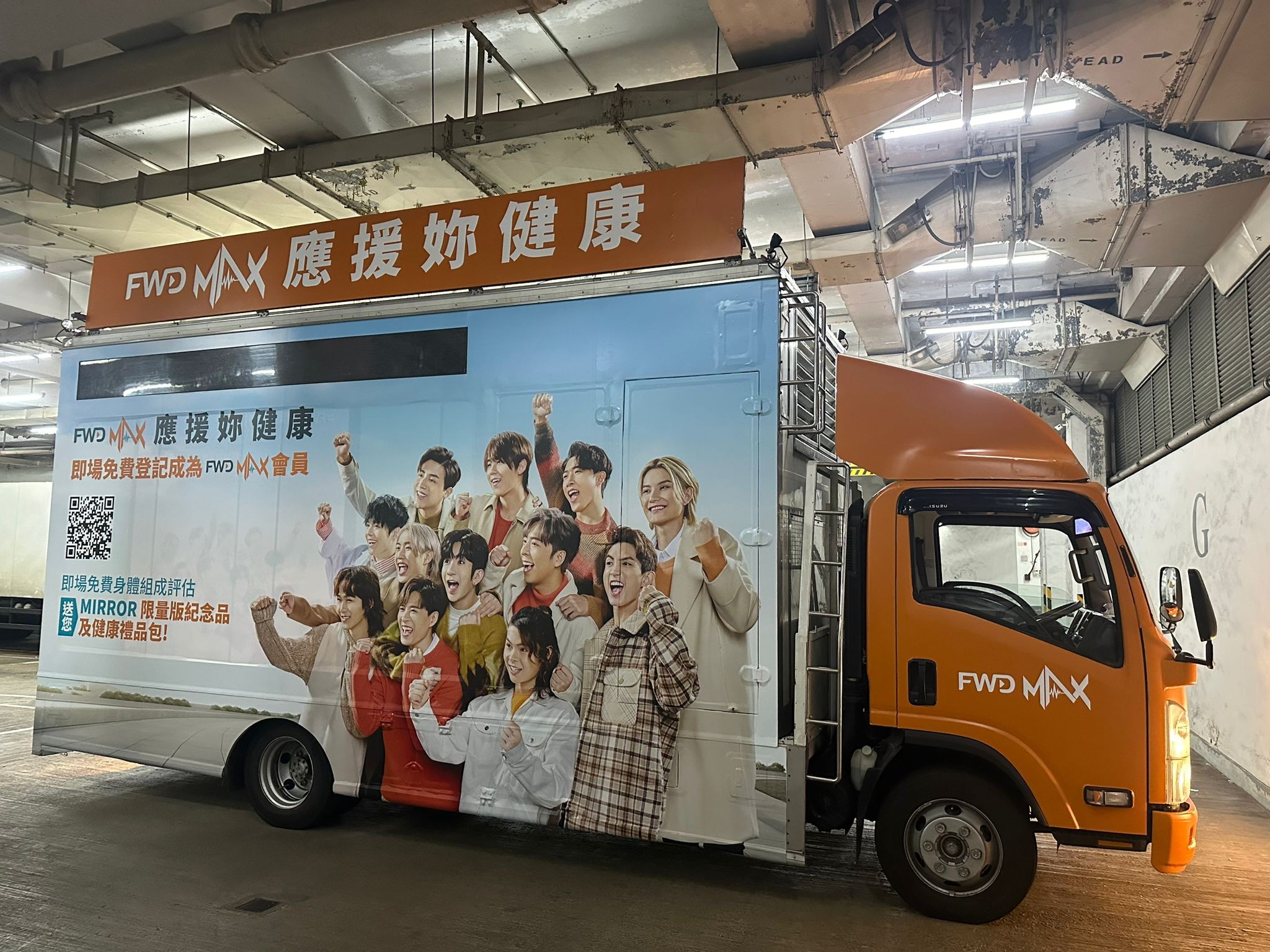
These are the 20 questions we most often receive by phone and WhatsApp. Answers refer where possible to legislation, official guidance or public market data, because inaccurate licensing or material advice can be costly for clients.
Part 1 | Licensing and regulation (Q1–Q5)
Q1: What licences does a mobile promotional vehicle need?
Section 52A of the Road Traffic Ordinance (Cap. 374) defines and restricts vehicles used or intended primarily for advertising. Owners can apply and pay the prescribed fee for a permit from the Commissioner for Transport, who may impose conditions including validity.Current Transport Department policy issues these permits only for non-commercial uses. As at 2 September 2025, only seven were valid in Hong Kong. Driving or using an advertising vehicle without the required permit carries maximum penalties of HK$5,000 and three months' imprisonment for a first conviction, or HK$10,000 and six months for subsequent convictions.
Accordingly, standard commercial campaigns use properly licensed goods vehicles or vans fitted with compliant graphics or LED screens, operating under ordinary traffic and parking rules.Non-commercial election and charitable publicity falls within the intended section 52A permit mechanism. Consult current Transport Department guidance for individual cases; we help clarify requirements when quoting.
Q2: What physical restrictions apply to vehicle graphics?
The Road Traffic (Construction and Maintenance of Vehicles) Regulations impose three key limits: do not obstruct the driver's view, mandatory lights or reflectors, or the registration number. Installations must also be secure. Transport Department taxi-advertising criteria reflect the same principle: advertisements and devices must be installed safely in an approved manner without obstructing required lights or reflectors.
Consult the manufacturer or agent before any alteration, as Transport Department guidance notes that modifications may affect warranty conditions. This is particularly relevant to LED screens, extendable displays and roof equipment. For production guidance, see The complete advertising truck production process。
Q3: What legal restrictions apply to advertising content?
First, a common misconception: Hong Kong has no single general “Advertising Ordinance”. Separate laws govern different content. The Smoking (Public Health) Ordinance (Cap. 371) defines advertising broadly enough to include vehicle graphics. Section 14(1) covers advertisements expressly or implicitly inducing, suggesting or urging the purchase or use of smoking products; wording deliberately promoting their use; or depicting or referring to smoking, smoking products, packaging or characteristics.Section 14(2) also treats advertisements containing a smoking-product trademark, brand name or associated design, or part of that design, as smoking-product advertisements.The stated maximum penalty is HK$50,000, plus HK$1,500 for each day of a continuing offence.
Medical and health claims, financial promotions, trade descriptions and price claims have their own laws and regulators. Election advertisements also follow Electoral Affairs Commission guidance, including restrictions on windows, positions obstructing the driver, areas above windows and exterior roofs.Check the rules for your sector or obtain professional advice before final artwork approval.
Q4: Can vehicle speakers play music or sales announcements?
Audio equipment is subject to the Noise Control Ordinance (Cap. 400). Section 5(1)(b) provides that at any time, noise from loudspeakers, megaphones or other amplification in domestic premises or public places is unlawful if it causes annoyance amounting to a nuisance. Vehicle-mounted loudspeakers are also covered.The provision specifies no acceptable noise level or assessment procedure; nuisance is the test.
Election guidelines separately prohibit candidate loudspeaker use from 9pm to 9am. The Environmental Protection Department consulted in 2023 on banning loudspeaker hawking in or near public places and introducing fixed penalties; check its current announcements for implementation. In practice, we control volume, avoid residential and night-time use, and prioritise visual impact.
Q5: Can a vehicle enter private estates, malls or schools?
Obtain prior written owner or management permission for private property. Confirm access hours, clearance, passage width, floor loading, power and insurance; some estates or malls require extra insurance documentation. Government-land events need District Lands Office approval and any other applicable licences.
Schools require particular care: the Road Users' Code advises against stopping at or near school entrances, even for pupil pick-up or drop-off, and near school crossing patrols.Drive through safely at dismissal or use nearby legal parking instead of stopping at the gate. Obtain school permission before entering the grounds. For stopping restrictions, see Mobile advertising truck routes, timing and coverage strategy。
Part 2 | Hire periods and booking (Q6–Q9)
Q6: How many hours does a “day” include?
At least two definitions are used, an easily overlooked difference between quotes. One offers eight operating hours between 10am and 10pm; another offers nine service hours starting on arrival at the target location, excluding the outward journey. The latter can benefit customers at distant venues. Ask how many hours are included, when the clock starts and whether travel counts before comparing prices. See Mobile billboard hire costs 2026: rates and quote breakdown。
Q7: How far ahead should I book?
Allow for the longest of three constraints.Vehicle availability: normally book at least a week ahead. Before Lunar New Year, Christmas/New Year, school terms, major exhibitions and concerts, vehicles may fill one or two months ahead and some dates carry surcharges.Vehicle graphic production: without printing, same-day or next-day availability may be possible. Printing and installation commonly need around 14 days.Event licensing: public-entertainment activities may require a TPPE application at least 42 days ahead with temporary structures or 18 days without.
For an event combining performances and printed graphics, licensing often determines the lead time. See Stage trucks and mobile advertising: event production and the TPPE licensing process。
Q8: How is overtime charged?
Public market rates commonly range from HK$200–300 an hour, depending on supplier and vehicle. Allow one or two hours of scheduling flexibility because last-minute extensions require driver and staff coordination with less room to negotiate. More fundamentally, place the eight or nine hours well: lunch and after work for office audiences, weekend afternoons and evenings for families.Good timing often avoids overtime.
Q9: Can dates or routes change at short notice?
Distinguish two kinds of change.Route changes require driver replanning, restriction and traffic checks, and possibly revised tunnel or cross-district charges. Notify the supplier early, ideally confirming the day before; major changes can affect the allocated hours.Content changes are faster on LED: replacing MP4 or JPEG files allows same-day switching. Vehicle graphics require new materials and labour. If changes are likely, choose LED at the outset.
Part 3 | Vehicle design and production (Q10–Q13)
Q10: How long does graphic production take?
Printing and installation generally need about 14 days for artwork approval, printing, application and curing, each requiring working time. Without printing, same-day or next-day vehicle service may be possible subject to availability.Decide whether to use printed graphics at least three weeks before the event, leaving a week for revisions and unexpected issues.
Q11: What material is used and how long does it last?
Cast vinyl is a common vehicle-graphics material because it is thin and conforms to complex curves around handles, bumpers and mirrors with less edge lifting.Its lifespan can be longer than expected:
| Material condition | Vertical surfaces (sides and rear) | Horizontal surfaces (bonnet and roof) |
|---|---|---|
| Unprinted 3M IJ180mC without laminate: expected performance life | White: 10 years; clear: 8 years; metallic: 6 years | — |
| Printed cast vinyl with matching protective laminate: industry reference | 5–7 years | 3–5 years |
| 3M Wrap Film warranty | Up to 8 years | Up to 3 years |
| 3M IJ180-series standard printed wrap: supplier warranty | Up to 7 years | Up to 1 year |
Horizontal surfaces receive more direct UV exposure, so roofs and bonnets generally have shorter lifespans. Also consider the material's shelf life: typically two to three years from manufacture unopened, or one year after opening without exceeding three years from manufacture. Do not keep leftover material indefinitely for later reuse.
Treat suitable vehicle graphics as a multi-year asset.If the key visual remains unchanged, the same installed graphics can serve several events and spread production costs. For frequent brand or theme changes, use magnetic panels or removable-grade vinyl.
Q12: What does vehicle graphic production cost?
Public Hong Kong printing and vehicle-graphics prices provide these references:
| Vehicle and coverage | Supplier A | Supplier B |
|---|---|---|
| Van, left and right sides | 6,300 per vehicle | 5,500 per vehicle |
| Van, four sides | 6,800 per vehicle | 6,300 per vehicle |
| Four sides and roof: full vehicle | 8,500 per vehicle | 7,500 per vehicle |
| 5.5-tonne truck, two sides | — | 4,000 per vehicle |
| Fleet above ten vehicles, excluding roof | 5,000 per vehicle | — |
| Mobile advertising truck, full vehicle | 15,000 per vehicle | 18,000 per vehicle |
Other printers list matte vehicle vinyl at around HK$36–44 per square foot for material estimates. Public design quotes range from about HK$1,800 for full-wrap design to a supplier's HK$4,800 general design fee, reflecting scope and service depth. Another supplier lists printing and installation around HK$20,000.Fleet quotes above ten vehicles can fall to around HK$5,000 per vehicle, demonstrating production economies of scale.
Q13: For short hire, choose printed graphics or LED?
Consider one supplier's tiered quote: seven days' hire is HK$31,500 (HK$4,500 × 7), plus HK$4,800 design and HK$20,000 printing/installation, totalling HK$56,300.Production accounts for about 44% of the total. For 28 days, hire is HK$78,400 (HK$2,800 × 28), bringing the total to HK$103,200; production accounts for about 24%。
. Production is a one-off cost whether the hire lasts three days or 30. As a practical guideline, use LED for one- to three-day events, avoiding physical production costs and allowing same-day changes; consider printed wraps for campaigns of three weeks or more, where the cost is spread over longer use and the full vehicle provides broader visual coverage.
Part 4 | LED screens and content (Q14–Q17)
Q14: What formats and dimensions does LED support?
MP4 video and JPEG images are generally accepted. Common Hong Kong configurations include a side screen about 2.4 m high × 5.76 m wide and a rear screen about 2.4 × 2.24 m. Another configuration is 2.24 × 3.52 m at 560 × 880 pixels.
Remember that the canvas may be only a few hundred pixels wide.A 560 × 880 canvas is smaller than many phone screenshots, so detailed desktop artwork can blur on the vehicle. Use one message per frame, type readable from ten metres, high contrast, no fine lines or pale small text, a stationary call to action, and 15–30-second content loops. We provide exact canvas dimensions and safe areas after the vehicle is confirmed.
Q15: Is LED visible in daylight, and how many nits are needed?
Yes, with sufficient brightness.Industry specifications commonly use 5,000 nits as the outdoor mobile LED minimum, with 5,000–6,500 nits typical and some models rated at 7,000–8,000 nits or more. Screens below 4,000 nits may appear washed out in afternoon sunlight.
For comparison, indoor displays are generally 500–1,000 nits, home TVs 250–350 nits, and a sunlit sky has a reference brightness around 6,500 nits. Outdoor LED must therefore compete with sunlight. Screens usually dim at night to reduce glare, when their visual effect is strongest. Ask for the actual vehicle's brightness specification when comparing quotes.
Q16: How should I choose pixel pitch?
Start with viewing distance. Mobile advertising trucks commonly use P4–P8:
| Pixel pitch | Suggested viewing distance | Application |
|---|---|---|
| P2.9–P3.9 | About 2–8 m | Stationary displays, close pedestrians and small text |
| P4 | About 2.4–12 m | Pedestrian areas, event entrances and shopping-centre surroundings |
| P5 | About 4.6–18 m | Versatile for pedestrians and roadside traffic |
| P6–P8 | About 9 m or more | Wide main roads and fast-moving traffic |
How to check a “high definition” claim: Ask for physical screen dimensions and pixel resolution, then divide. A 2.24 × 3.52 m screen at 560 × 880 pixels gives 3,520 mm ÷ 880 = 4 mm, confirming P4. A 2.4 × 5.76 m P4 side screen should have 600 × 1,440 pixels. This converts a description into comparable numbers. See LED advertising trucks versus mini promotional trucks。
Q17: Can LED content change on the same day?
Yes. Replace MP4 or JPEG files to show opening information in the morning, offers in the afternoon and a countdown at night. The same vehicle can support warm-up, event-day and follow-through phases with low content-change costs. Mention frequent updates, live offers or event footage when requesting a quote so technical support can be arranged.
Part 5 | Costs, results and other questions (Q18–Q20)
Q18: What is the daily hire rate?
Public LED rates commonly range from HK$2,500–5,500 daily; rental platforms also list HK$5,500 daily, around HK$35,000 weekly and HK$90,000–105,000 monthly. Tiered quotes include around HK$4,500 a day from seven days, HK$3,500 from 14 and HK$2,800 from 28. Full roadshow packages are a different category: one supplier lists HK$33,000 per weekday, HK$88,000 weekly and HK$268,000 for four weeks, including driver, emergency coordinator, two 50-inch TVs, LED banners on both sides, generator, air conditioning, 4G and graphic production/installation.
A daily price alone is not enough to compare offers: confirm hours and inclusions. Standard quotes generally include vehicle, driver, fuel and one return tunnel crossing. Design/printing, LED content production, overtime, extra generators, event staff and access to specified venues are usually additional.
Q19: Do advertising trucks really achieve 97% recall?
The figure has a cited source, but it is not Hong Kong data. It is attributed to Transportation Advertising Council of America research reported in July 2002 in Outdoor Advertising. The same research said 96% considered mobile advertising more effective than traditional outdoor formats; RYP & Becker Group reported 97% recall versus 19% static-sign retention. The frequently quoted 107% sales-growth figure comes from a US Product Acceptance and Research, Inc. beer study, reporting 43% static versus 94% mobile recall and 54% versus 107% sales growth.
The research is old, US-based and not publicly standardised in method. Hong Kong's density, advertising saturation and attention environment differ, and it has no shared public OOH impression audit standard.These figures can inform discussion of moving advertising, but should not be used for budget forecasts or performance guarantees.For the source trail, see Public case studies and the “97% recall” claim。
Q20: How can I verify delivery and measure results?
Use four levels, from directly verifiable delivery to measures requiring assumptions.Delivery: require route logs showing actual roads, times and stop durations, plus photos/video, in the contract. Some fleets use real-time GPS across all vehicles.On-site engagement: count contacts, participants, giveaways and scans. One public Hong Kong example reports over 40 locations, more than 30,000 contacts and over 6,000 participants, with 35% expressing interest in learning more and purchasing.Attribution: use a dedicated QR code, truck-only promotion code, short URL or phone number, matching responses to time slots.Exposure: estimate reach and CPM using explicit, consistent assumptions.
For business outcomes such as visits, brand searches and sales, compare with an equal prior period or unexposed branches. Review about 14 days after completion to allow for a typical one- to two-week response lag.
20-question quick reference
| # | Question | Short answer |
|---|---|---|
| Q1 | What licence is needed? | Current section 52A permit policy covers non-commercial uses; commercial campaigns use properly licensed vehicles with compliant graphics |
| Q2 | What physical limits apply? | Keep the driver's view, lights, reflectors and registration number clear; install securely |
| Q3 | What content restrictions apply? | Separate laws apply; smoking-product advertising carries a stated maximum HK$50,000 fine plus HK$1,500 per day for continuing offences |
| Q4 | Can we play music? | Subject to Noise Control Ordinance section 5(1)(b); nuisance is the test, with no acceptable decibel ceiling specified |
| Q5 | Can we enter estates or schools? | Written permission for private sites; do not stop at or near school entrances |
| Q6 | How many hours in a day? | Common packages: eight hours between 10am and 10pm, or nine hours from arrival |
| Q7 | How much notice? | At least a week for availability, about 14 days for printing, and 18 or 42 days for relevant event licensing; allow the longest |
| Q8 | What does overtime cost? | Commonly around HK$200–300 an hour |
| Q9 | Can arrangements change at short notice? | Confirm routes ideally a day ahead; LED can change the same day, while graphics require replacement |
| Q10 | How long does production take? | About 14 days with printing; same-day or next-day service may be possible without it |
| Q11 | How long does vinyl last? | Printed laminated cast vinyl: typically 5–7 years vertically and 3–5 years horizontally |
| Q12 | What does production cost? | Van sides around HK$5,500–6,300; full advertising-truck graphics around HK$15,000–18,000 |
| Q13 | Printed graphics or LED for short hire? | LED for three days or fewer; production is about 44% of the cited seven-day all-in example |
| Q14 | LED formats and dimensions? | MP4 or JPEG; common screens include 2.4 × 5.76 m and configurations at 560 × 880 pixels |
| Q15 | How many nits? | A common minimum of 5,000 nits; typically 5,000–6,500 |
| Q16 | How to choose pixel pitch? | P4 for about 2.4–12 m; P5 for 4.6–18 m; P6–P8 for nine metres or more |
| Q17 | Can content change the same day? | Yes, by replacing MP4 or JPEG files |
| Q18 | What is the daily rate? | LED commonly HK$2,500–5,500; full roadshow packages can reach HK$33,000 per weekday |
| Q19 | Is 97% recall a reliable expectation? | The cited US figure dates to July 2002 and should not be applied directly to Hong Kong in 2026 |
| Q20 | How to measure results? | Delivery, on-site activity, attribution and estimated exposure: from verifiable records to assumptions |
Further reading
- The 2026 mobile advertising guide for Hong Kong brands
- Mobile billboard hire costs 2026: rates and quote breakdown
- Mobile billboards versus bus, MTR lightbox, tram and taxi advertising
- LED advertising trucks versus mini promotional trucks
- Routes, Timing and Coverage Strategies
- Stage trucks, mobile billboards and TPPE licensing
- T2 pop-top and mini vintage vans
- Public case studies and data provenance
- Mobile Promotion Across 10 Industries
- All services|LED advertising truck|Mini promotional truck|Mobile showroom truck|Mobile stage truck|About us|Request a quote
Source
- Licensing and road rules: Road Traffic Ordinance section 52A, restrictions on advertising vehicles、Transport Department Road Users' Code · Places where stopping is prohibited、Transport Department Road Users' Code · Places where parking is prohibited、Transport Department · Vehicle alteration and modification guidelines、Transport Department · Taxi advertising approval criteria
- Advertising content and noise: Department of Health · Smoking (Public Health) Ordinance advertising provisions and penalties、Electoral Affairs Commission · Guidelines on loudspeakers and vehicles、Government document · Rules for election advertisements on vehicles
- Event licensing: FEHD · Guide to Application for Places of Public Entertainment Licences、Legislative Council document · Lands Department approval for government-land use
- Vehicle graphic material lifespans: 3M · Print Wrap Film IJ180mC product bulletin: performance life and shelf life、3M · Wrap Film warranty、Identity Graphx · Cast vinyl lifespan on vertical and horizontal surfaces
- Production and rental prices: Printrainbow · Vehicle advertising prices、Print-Easy · Vehicle advertising prices、TexWood Media · Vehicle prices, service-hour definitions and production lead times、Tinby Advertising · Promotional vehicle package prices、RentCarKing · LED advertising truck daily, weekly and monthly rates
- LED specifications and research: Litestar · Minimum mobile LED brightness、Adintime · LED dimensions and playback formats、Transportation Advertising Council of America research compilation (July 2002)、RoadAds · Public Manulife advertising truck campaign figures
Regulatory information is general, not legal advice. Check current Transport Department, Environmental Protection Department, FEHD, Department of Health and Electoral Affairs Commission publications, and verify sector-specific content rules. Prices and material lifespans are public references at the time of writing, not quotations or durability guarantees. Older overseas research is not Hong Kong data and does not promise results.