Mobile Promotion Across 10 Industries: Property, Food, Retail, Elections and Charities
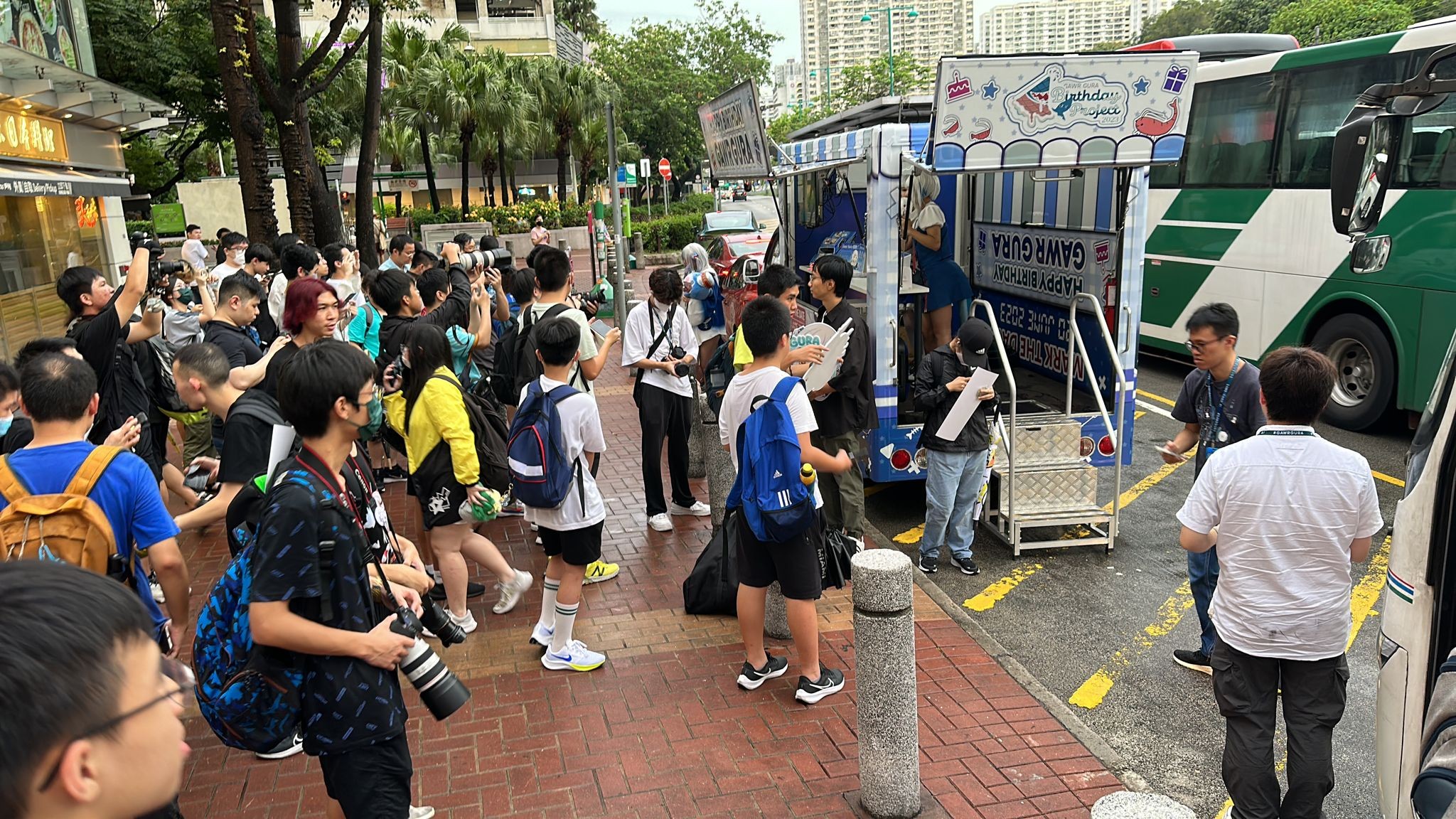
The same promotional vehicle can cover a property development's catchment, attract diners with tastings, become a mobile flagship store or bring ice cream and quizzes to housing estates. These ten approaches depend on just four underlying variables. This article explains each industry's deployment choices, using verifiable Hong Kong examples rather than unsupported claims such as a “32% increase”.
1. Four variables determine the approach
Across these ten industries, asking “which industry suits advertising trucks?” misses the point. Four variables determine deployment:
Variable 1: geographical concentration
Property and education audiences are highly concentrated around a development or school, so budgets should favour frequent repetition within a small area. E-commerce and finance audiences are spread across the city, favouring broad coverage in busy commercial districts.The more concentrated the audience, the stronger the case for a small vehicle over several days; the more dispersed, the stronger the case for a large vehicle in core districts.
Variable 2: street conditions
A nine-tonne truck cannot enter many school approaches, older side streets and internal estate roads, even when the audience is there. On Des Voeux Road Central, Hennessy Road in Causeway Bay and Nathan Road in Mong Kok, larger display areas have more impact. Check the map before choosing the vehicle.
Variable 3: staffing needs
If the campaign depends on handing something over, letting someone try it or helping them register, it is an event operation. The vehicle is the platform. Staff, materials and venue permissions become essential, and payload and space matter more than screen size.
Variable 4: frequency of content changes
Daily discounts, countdowns and frequently updated election messages require LED playback. For a long campaign with one unchanged key visual, vehicle graphics cost less. This determines whether an LED premium is worthwhile. See LED advertising trucks versus mini promotional trucks。
2. Property: focus on the catchment
Industry objectives
New developments need visitors to show flats; resale agents need local recognition; acquisition and tender projects need to inform specific owners. Property demands geographical precision: exposure to someone with no interest in the area has little value.
Vehicles and deployment
Use an LED advertising truck to circulate on main roads around the development. LED can show different messages throughout the day: an invitation to visit in the morning, layouts and price per square foot in the afternoon, and a 9pm registration deadline in the evening. Add a Mini promotional truck to cover estate entrances and market areas inaccessible to the larger truck.
Practical scheduling
A standard driver shift is eight consecutive hours, so select the hours carefully. Mornings reach family members at home and older residents; lunchtime reaches local workers; evenings reach couples returning from work, often the decision-makers. A warm-up week followed by stronger activity on launch day and the first weekend can outperform ten evenly allocated days. See Stage Trucks and Mobile Billboards for Property Launches and Major Events。
Creative priorities
A common property mistake is transferring a sales brochure onto LED. The canvas may be only a few hundred pixels wide, and pedestrians have two or three seconds. Effective creative usually has four elements: development name, one compelling number such as price per square foot, deposit or layout, location, and a scannable registration entry point.
3. Food and dining: turn passing traffic into immediate visits
Industry objectives
For openings, product launches and limited menus, the goal is a visit today. Food campaigns can produce an immediate response because the decision requires little commitment.
Vehicles and deployment
Mobile showroom truck or Mini promotional truck is well suited because it supports display and distribution. Our mini promotional truck carries up to 1,000 kg and provides solar power and Wi-Fi, accommodating tasting supplies, warming equipment and giveaways to function as a small event point.
Create a trackable response channel
Food campaigns offer straightforward attribution: use a dedicated QR code on the vehicle and giveaways, a truck-only promotion code or an in-store password. Street exposure can then be compared directly with same-day visits. See Mobile Billboards for Food Businesses: Restaurant and Food Event Promotion and A practical three-day store-opening plan。
Industry practice
Public Hong Kong advertising-vehicle industry information identifies major local food businesses as a leading customer category alongside retail, tourism, film and entertainment, and government departments. Specialist ice cream and character vehicles also serve food and FMCG brands. What matters is whether a vehicle supports distribution, trials and redemption, rather than its size alone.
4. Retail and FMCG: a mobile flagship in practice
Industry objectives
Beauty, personal care and clothing brands want consumers to see, touch, try and buy on the street, creating a complete experience.
Verifiable example: The Body Shop advertising truck
The Body Shop designed an advertising truck as a miniature shop, with product shelves, a trial area and checkout equipment. Its classic green branding and nature-inspired design communicated environmental values. The route covered Causeway Bay, Central and Mong Kok, with brief residential stops to reach a wider audience.
The lesson is the three-part route strategy: shopping districts generate visibility and conversation, residential areas encourage trials and conversion, and consistent vehicle branding links both. Replicating it requires an opening display space, power and staff. See Mobile showroom truck and End-to-end event production。
Practical vehicle design advice
Retail brands often have strict guidelines, but vehicle surfaces curve around windows and wheel arches. A flat artwork cannot simply be pasted on. Obtain the actual vehicle template during design and ensure graphics do not obstruct the driver's view, mandatory lights, reflectors or registration number, as required by the Road Traffic (Construction and Maintenance of Vehicles) Regulations. For production guidance, see Advertising Truck Production: Vehicle Design, Printing and LED Conversions。
5. Education and training: timing is critical
Industry objectives
Tutors, kindergartens, international schools and overseas study providers have a very short window to reach parents during enrolment season: often the 90 minutes around school dismissal.
Vehicles and deployment
Mini promotional truck is usually the practical choice. Schools are often surrounded by narrow streets, residential roads and restricted areas where large vehicles struggle to enter or stop. A small vehicle can use ordinary parking and loading spaces where permitted, making a five-school daily route feasible.
Deployment priorities
- Plan the eight-hour shift around dismissal times and visit several schools instead of spending the entire day outside one.
- Show just the organisation name, open-day or trial-class date, and a scannable registration link. Parents collecting children will not read lengthy text.
- Repeat visits to the same schools over several days can work better than reaching 20 schools once: enrolment decisions require familiarity and trust.
- Check parking restrictions and restricted hours around schools on site before confirming the route.
For route and schedule planning, see Routes, Timing and Coverage Strategies and our campaign guide to all 18 districts。
6. Healthcare and community health: the vehicle is the service point
What makes this sector different
Here the vehicle primarily delivers a service, with publicity as a secondary benefit. It brings care to people who might otherwise be missed. Hong Kong has established examples to learn from.
Verifiable example: mobile dental services
Since 2014, the University of Hong Kong Faculty of Dentistry has sent dentists and students into districts by mobile dental vehicle to provide free checks and treatment for disadvantaged residents. Reports by the end of 2019 stated that more than 4,000 people had been served, with around one in ten requiring immediate extraction for serious dental problems. The Kwai Tsing Safe Community and Healthy City Association also launched a three-year mobile dental programme for residents aged 60 or above and low-income families, aiming to serve over 5,000 people. Project Concern Hong Kong operates a regular weekly mobile dental timetable, rotating between Tuen Mun's Trend Plaza, Tai Wai Station Exit A, Lung Hei House at Lower Wong Tai Sin Estate, and the lower-level pick-up area outside Tsing Yi Station Exit A.
The lesson for every industry: a fixed schedule is more effective than random appearances.Predictable stops such as Mondays in Tuen Mun and Wednesdays in Tai Wai help residents form a habit. Brands building a long-term neighbourhood presence can use the same approach to establish familiarity.
Vehicles and deployment
Mobile showroom truck can be adapted into a service station with examination or consultation space inside and educational LED or vehicle graphics outside. Clinical staff, queues and supplies require event operations, coordinated by an event production team .
7. Finance and insurance: build trust through presence
Industry objectives
For credit cards, savings plans, MPF transfers and virtual-bank accounts, the barriers are often distrust and the effort involved. Financial brands typically use promotional vehicles for visibility in business districts, with other channels completing conversion.
Vehicles and deployment
Focus on an LED advertising truck in Central, Admiralty, Wan Chai, Kwun Tong and Tsim Sha Tsui East during lunch and after work. Show one question or number rather than a product explanation. Financial details cannot be communicated in three seconds; the visual should make people remember and search for the brand.
For a premium image or private-banking audience, a T2 pop-top van offers another approach. Its opening roof and optional generator suit decoration at a fixed venue, event entrance or hotel rather than a driving tour.
Attribution
Financial products have longer conversion cycles, so same-day account openings are a poor standalone measure. Compare brand searches and direct website traffic during the campaign and the following two weeks against an equal pre-campaign period. For the measurement framework, see Mobile billboards versus traditional outdoor advertising: costs and ROI。
8. Automotive and large products: bring the showroom to customers
Industry objectives
Cars, appliances, furniture and building materials benefit from direct experience, but people may not make a special showroom trip. A mobile showroom reverses that journey.
Vehicles and deployment
A large Mobile showroom truck or exhibition truck can unfold at an agreed mall car park or event venue, with sales staff answering questions. Stops of one or two days across major malls from the New Territories to Hong Kong Island reach more communities than a single static mall display.
Practical considerations
- Obtain permission for malls and private sites in advance; this often takes longer than arranging the vehicle.
- Calculate power requirements beforehand and hire a generator if needed.
- Check vehicle height and turning radius against the site, particularly underground car-park clearance.
- Consult the manufacturer or agent before modifications to avoid affecting warranties and annual inspections.
9. E-commerce and online brands: establish a physical presence
Industry objectives
Online-only brands often face doubts about whether the company really exists. A branded vehicle on the street provides tangible evidence that digital advertising cannot replicate.
Vehicles and deployment
LED advertising truck is well suited because offers can change daily, with time-limited codes creating urgency. Make the QR code large and stationary, pointing to a dedicated campaign landing page for attribution.
Common design mistakes
A QR code that is too small, moves in an animation or passes too quickly cannot be scanned. Show QR creative during stationary periods; while driving, use the brand name and a memorable text promotion code. For comparison, see LED trucks versus traditional advertising vehicles。
10. Charity and government campaigns: established Hong Kong practice
Verifiable example: Jockey Club SMART Family-Link Project
To promote family well-being and healthy family functioning, and help Integrated Family Service Centres reach new groups, the Jockey Club SMART Family-Link Project arranged multimedia promotional vehicles to tour districts across Hong Kong, engaging residents and introducing apps developed by its team. The campaign ran in several rounds, including 28 October–19 November 2021 and 25 November–11 December 2024, with community stops such as Roman Square at Tin Shui Estate, Tin Shui Wai, Yuen Long.
Verifiable example: STAND BY YOU Kids' FUN Ice Cream Truck
From 1–20 September 2025, the Hong Kong Family Welfare Society's family support project collaborated with the Jockey Club SMART Family-Link Project on the “STAND BY YOU Kids' FUN Ice Cream Truck”, distributing ice cream cups while promoting positive parenting and family harmony. Twelve stops included Shun Lee Estate, Lai Kok Estate, Kwai Chung Plaza, Harbour North, On Tai Estate, Hoi Lai Estate, Kwai Fong Estate, Choi Ming Court, Yau Lai Estate, Yau Tong Estate, City Garden Road and Kin Ming Estate, with about four hours at each stop.
The participation mechanism offers lessons for every industry: Participants scanned an on-site QR code, answered two questions and showed a screenshot to staff for stamps on a redemption card, then exchanged the required stamps for ice cream.This attracted attention, conveyed messages, recorded interaction and produced measurable participation figures. Simple giveaways cannot achieve the last three as effectively.
Vehicles and deployment
Community campaigns often coordinate several vehicles across districts with consistent messaging, concentrating visibility and improving media appeal. For messaging alone, use an LED advertising truck; for distribution or booth interaction, a Mobile showroom truck or Mini promotional truck; for live performances or speeches, add a Mobile stage truck。
11. Election vehicles: understand the rules first
Loudspeaker time restrictions
Electoral Affairs Commission guidelines state that, to minimise public nuisance, candidates must not use loudspeakers for electioneering between 9pm and 9am. At any time, amplified noise causing annoyance amounting to a nuisance breaches section 5(1)(b) of the Noise Control Ordinance (Cap. 400), and vehicle-mounted loudspeakers are also covered. The ordinance specifies no acceptable decibel level; nuisance is the test.
Election advertising on other vehicles
The guidelines also state that owners or operators displaying election advertisements on public light buses or taxis must first obtain written Transport Department approval and meet the conditions in that approval, including safe vehicle operation.
The special advertising-vehicle permit system
Section 52A of the Road Traffic Ordinance (Cap. 374) defines and restricts vehicles used or intended primarily for advertising. Owners must apply and pay the prescribed fee for a permit issued by the Commissioner for Transport, who may impose conditions including its validity period.Current Transport Department policy issues advertising-vehicle permits only for non-commercial purposes, and numbers are very small: as at 2 September 2025, only seven valid permits existed in Hong Kong. Driving or using an advertising vehicle without a permit carries a maximum first-conviction penalty of HK$5,000 and three months' imprisonment; subsequent convictions carry up to HK$10,000 and six months.
Non-commercial election and charitable publicity may therefore fall within this permit mechanism. Standard commercial promotions use properly licensed goods vehicles or vans with compliant graphics or LED screens, operating under ordinary road and parking rules. Consult current Transport Department guidance for individual cases. For licensing and time restrictions, see Twenty frequently asked questions about mobile promotional vehicles。
Vehicles and deployment
Election periods are short, decisions fast and vehicle demand intense, so reserve early. A common combination uses an LED advertising truck for candidate videos and platforms, updated daily, with a Mobile stage truck for speeches near markets and estate entrances, supported by an event production team coordinating routes, staff and content review.
12. Vehicle choices across ten industries
| Industry | Primary objective | Suggested vehicles | Deployment priority |
|---|---|---|---|
| Property | Bring visitors to show flats | LED + mini truck | Frequent local repetition; different morning, afternoon and evening messages |
| Food and beverage | Same-day restaurant visits | Mobile showroom / mini truck | Tastings and distribution + dedicated promotion-code attribution |
| Retail and FMCG | Complete brand experience | Mobile showroom (mobile shop) | Shopping districts for visibility; residential areas for trials |
| Education and training | Reach parents during enrolment | Mini truck | Several schools around dismissal; repeated over consecutive days |
| Healthcare | Bring services into communities | Mobile showroom (service station) | A fixed timetable builds familiarity |
| Finance and insurance | Visibility in business districts | LED / T2 vintage van | Lunch and after-work slots; one message per visual |
| Automotive and large products | Bring the showroom to customers | Large mobile showroom / exhibition truck | Set up in mall car parks; arrange permission and power |
| E-commerce and online brands | Establish physical presence and drive traffic | LED | QR codes while stationary; promotion codes while moving |
| Charity and government | Reach more residents | Coordinated fleet + interactive vehicles | A participation mechanism makes engagement measurable |
| Elections | Build recognition quickly | LED + stage truck | Observe loudspeaker hours; reserve very early |
13. Five principles for every industry
- Choose the hours before the number of days.A standard shift is eight consecutive hours; the wrong timing wastes the spend.
- LED for short hire; printed wraps for longer campaigns.Printing is a one-off cost for three days or 30. Over a short hire, its daily share can exceed rental. LED playback is recommended for three days or fewer.
- Give each campaign a dedicated tracking channel.A QR code, short URL, truck-only promotion code or dedicated telephone number can turn street exposure into attributable responses.
- Request proof of delivery.Route records verify execution, while on-site photos can become social content.
- Reserve early for peak periods.Book at least one week ahead, longer for printed wraps. Vehicles can fill one or two months in advance before Lunar New Year, Christmas and New Year, school terms, major exhibitions and concerts. For seasonal scheduling, see Seasonal Promotional Vehicle Planning Schedule。
14. Frequently asked questions
Can mobile billboards work for an industry not listed here?
Ask four questions rather than relying on industry labels: is the audience geographically concentrated or dispersed; are target streets wide or narrow; do staff need to distribute, demonstrate or register; and must content change? These largely determine vehicle and duration. B2C, B2B and non-profit organisations can plan campaigns with a clear area and time window. They are less suitable when the target audience cannot meaningfully be reached on the street, such as purely corporate procurement decision-makers.
What is the minimum hire period for each industry?
There is no statutory minimum. One day, usually eight consecutive driver hours, is the common minimum booking unit. Match duration to the decision cycle: food and retail offers can show responses in one to three days; education and property often need five to seven days or phased activity to build trust; finance and charitable brand campaigns commonly run two to four weeks with costs spread monthly. Phases such as warm-up, event day, first weekend and month-end can be more efficient than continuous activity. See the short- versus long-term hire analysis.
Can different industries use the same vehicle artwork?
It is not recommended. Property audiences look for numbers and location; food audiences for products and immediate offers; education audiences for dates and registration; election audiences for candidates and numbers. Artwork must also fit each vehicle's curves, windows and wheel arches using its actual template, without obstructing driver visibility, mandatory lights, reflectors or registration numbers.
What needs special attention for election vehicles?
Three points: Electoral Affairs Commission guidelines prohibit candidate loudspeaker use for electioneering from 9pm to 9am; nuisance from speakers at any time breaches section 5(1)(b) of the Noise Control Ordinance, including vehicle-mounted units, with no acceptable decibel ceiling specified; and public light bus or taxi owners/operators must obtain written Transport Department approval for election advertisements and meet its conditions. Reserve vehicles and production time early because availability is tight.
How do legal requirements differ for charitable campaigns?
Section 52A of the Road Traffic Ordinance provides an advertising-vehicle permit mechanism, issued on application by the Commissioner for Transport with possible conditions. Current policy issues permits only for non-commercial uses; as at 2 September 2025, only seven were valid in Hong Kong. Non-commercial charitable and election publicity falls within the intended scope. Using or driving an advertising vehicle without a permit carries maximum penalties of HK$5,000 and three months' imprisonment on a first conviction, or HK$10,000 and six months subsequently. Consult current Transport Department guidance on applications and applicability to your project.
Can one vehicle switch between different industries' content during a campaign?
Yes, depending on the display method. LED is most flexible: replacing MP4 or JPEG files allows same-day changes for multiple brands or campaign phases. Vehicle graphics require replacement materials and labour; if changes are planned, design replaceable full panels and allow working days. Changing a printed wrap over a short period is generally poor value in time and cost.
How can community and charitable campaigns measure results?
Use a mechanism requiring interaction to earn a reward. The STAND BY YOU Kids' FUN Ice Cream Truck asked participants to scan a QR code, answer two questions, show a screenshot for stamps and redeem the required stamps for ice cream. This attracts attention, communicates the message, records interaction and creates countable participation. It measures people receiving the message rather than merely collecting a giveaway.
Why should mobile health and community services follow a fixed timetable?
Predictability builds habits. Project Concern Hong Kong's weekly dental schedule rotates between Trend Plaza in Tuen Mun, Tai Wai Station Exit A, Lung Hei House at Lower Wong Tai Sin Estate and the lower-level pick-up area outside Tsing Yi Station Exit A. Knowing, for example, Monday in Tuen Mun and Wednesday in Tai Wai lets residents plan and spread the word. The same principle supports long-term commercial neighbourhood campaigns.
What does an advertising truck quote include?
Daily quotes generally include the vehicle, driver, fuel and one return tunnel crossing, with eight consecutive driver hours commonly scheduled between 10am and 8–10pm. Overtime is commonly around HK$200–300 an hour. Design and production of graphics, LED creative and video, extra generators, event staff beyond the operator, additional tunnels or cross-district routes, and mall or private-site access are usually extra. Request an itemised quote rather than comparing daily totals alone.
What does an LED advertising truck cost?
Public market listings commonly show about HK$2,500–5,500 per day, HK$35,000 per week and HK$90,000–105,000 per month. Longer hire reduces average daily cost: HK$35,000 a week is around HK$5,000 daily, while HK$90,000 a month is around HK$3,000 daily. Extended tours therefore cost less per day than one-day pop-ups. These are market references; actual costs depend on vehicle, equipment, route and production requirements and must be confirmed by quotation.
Further reading
- The 2026 mobile advertising guide for Hong Kong brands
- Mobile Billboards vs Bus, MTR Lightbox, Tram and Taxi Advertising: Costs and ROI
- LED Screen Trucks vs Mini Promotional Trucks: Specifications, Brightness, Pixel Pitch and Costs
- Hong Kong mobile advertising case studies
- Choosing a mobile advertising vehicle: comparison of five vehicle types
- Advertising vehicle hire costs in 2026 explained
- Complete promotional plan for product launches
- Advantages of mini promotional trucks
- All PEAKVEIN promotional vehicle services|About us|Contact us
Source
- Retail examples: RoadAds · The Body Shop advertising truck case study、RoadAds · Mobile advertising vehicle types and customer categories
- Community examples: Jockey Club SMART Family-Link Project · Second mobile promotional vehicle tour、Hong Kong Family Welfare Society × Jockey Club SMART Family-Link Project · STAND BY YOU Kids' FUN Ice Cream Truck
- Healthcare examples: on.cc · HKU Faculty of Dentistry mobile dental community service、Project Concern Hong Kong · Mobile dental service timetable、Kwai Tsing Safe Community and Healthy City Association · Three-year community dental service
- Elections and regulation: Electoral Affairs Commission · Guidelines on loudspeakers and vehicles、Road Traffic Ordinance section 52A, restrictions on advertising vehicles、Transport Department · Vehicle alteration and modification guidelines
- Pricing references: RentCarKing · LED advertising truck daily, weekly and monthly rates、Exhibition King · Promotional vehicle hire inclusions
Third-party examples illustrate industry practice and are not PEAKVEIN client projects. Prices are public market listings at the time of writing, for reference only, and do not constitute quotations. Legal information is general; consult current Transport Department, Environmental Protection Department and Electoral Affairs Commission publications for individual cases.