LED Screen Trucks vs Mini Promotional Trucks: Specifications, Brightness, Pixel Pitch and Costs
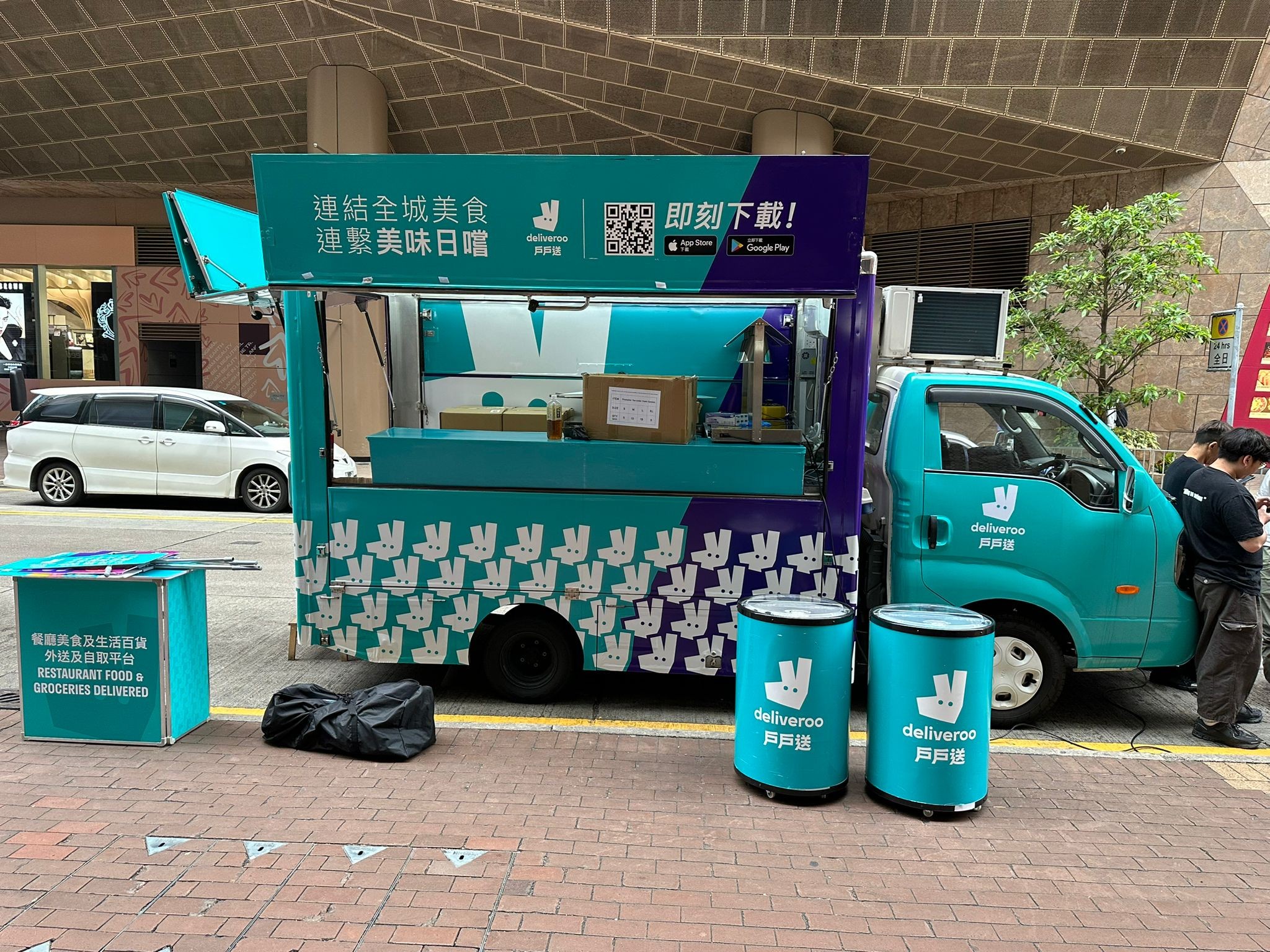
Bigger is not automatically better. LED trucks emphasise visual impact and changeable content; mini trucks emphasise access and neighbourhood reach. Choose around the setting using hardware specifications and market prices rather than impressions.
1. Understand their different roles
LED trucks: mobile outdoor digital screens
Bright outdoor screens on one or more sides show video, animation and scrolling text. Their value extends beyond size: content can change the same day, from morning opening offers to afternoon discounts and evening countdowns, without reprinting physical materials.
Common market formats include nimble 3.5-tonne vehicles, larger 9-tonne displays and multi-sided screens. For actual vehicles and screens, see LED advertising truck service page。
Mini trucks: mobility for deeper local reach
Compact vehicles reach streets larger trucks cannot: Hong Kong's narrow lanes, older districts, one-way roads and limited loading areas constrain 9-tonne vehicles. Mini trucks help bring advertising physically closer to the target audience。
PEAKVEIN mini trucks include solar power, Wi-Fi and a maximum load up to 1,000 kg, supporting products, samples, supplies and small equipment. See the Mini promotional truck service page or read The Benefits of Mini Promotional Trucks: Reaching Further into Local Communities。
A simple decision rule
Choose LED to be seen from farther away; choose a mini truck to make contact nearby.One emphasises visibility, the other access. For all formats, see Five Vehicle Types Compared: A Selection Guide。
2. Specification comparison
The table lists verifiable or calculable specifications, without subjective star ratings. Confirm actual figures for the booked vehicle.
| Comparison item | LED advertising truck | Mini promotional truck |
|---|---|---|
| Common vehicle class | 3.5–9-tonne truck chassis | Small van class |
| Main display medium | Bright outdoor LED, one or several sides | Primarily graphics, with optional small LED |
| Common LED dimensions | Sides about 2.4 × 5.76 m, rear 2.4 × 2.24 m; also 2.24 × 3.52 m | Depends on added modules |
| Brightness requirement | At least 5,000 nits; commonly 5,000–6,500 | As above if LED is fitted |
| Common pixel pitch | P4–P8 | P4–P6 for closer viewing |
| Accepted formats | MP4 video, JPEG images | MP4/JPEG for LED; print files for graphics |
| Content-change cost | Minimal: replace the file | Graphics need reapplication; LED content can change immediately |
| Street access | Main roads, commercial districts and large venues | Narrow streets, older districts, estate routes and ordinary parking spaces |
| Display and distribution capacity | Depends on vehicle; 9-tonne formats may provide display space | Maximum load up to 1,000 kg for samples and products |
| Power supply | Vehicle power, with optional generator hire | PEAKVEIN mini vehicles include solar power and Wi-Fi |
| Market daily rate reference | About HK$2,500–5,500 for published LED quotes | Generally below comparable LED hire; vehicle-specific quotation |
3. Brightness, pixel pitch and canvas calculations
How many nits are needed outdoors?
Brightness is crucial. Industry specifications commonly use 5,000 nits as the minimum for outdoor mobile LED, with 5,000–6,500 typical and some manufacturers listing 7,000–8,000+. Displays below 4,000 nits may wash out in afternoon sun.
For context, indoor displays are generally 500–1,000 nits, home televisions around 250–350, and a daylight sky reference is about 6,500. Outdoor LED must compete with sunlight. At night, lower ambient light strengthens impact and automatic dimming reduces glare.
Pixel pitch and viewing distance
Pitch is the millimetre spacing between adjacent pixel centres. P4 means 4 mm. Smaller pitch increases density and detail but also cost and weight. P4–P8 is common for mobile advertising.
| Pixel pitch | Suggested viewing distance | Application |
|---|---|---|
| P2.9–P3.9 | About 2–8 m | Stationary displays, close pedestrian viewing and finer detail |
| P4 | About 2.4–12 m | Pedestrian areas, event entrances and shopping-centre surroundings |
| P5 | About 4.6–18 m | Versatile choice for pedestrians and roadside traffic |
| P6–P8 | About 9 m or more | Wide main roads, fast traffic and distant recognition |
Overpaying for fine pitch offers little visible benefit across a wide road. Conversely, P8 at a stationary display can look grainy to pedestrians three metres away.Establish viewing distance before choosing pitch.
Calculating pitch from specifications
A published 2.24 m-high × 3.52 m-wide screen with 560 × 880 pixels gives 3,520 mm ÷ 880 = 4 mm and 2,240 mm ÷ 560 = 4 mm. It is therefore P4。
Similarly, a 2.4 × 5.76 m P4 screen should be 600 × 1,440 pixels.Ask for physical dimensions and pixel resolution to calculate pitch yourself rather than relying on a “high definition” label.This quickly establishes whether supplier screens are genuinely comparable.
File specifications and design
MP4 or JPEG is usually accepted. Remember: your canvas may be only a few hundred pixels wide.A 560 × 880 image is smaller than a phone screenshot; intricate desktop artwork can become unreadable.
- Use one message per frame; pedestrians have two or three seconds.
- Use text readable at ten metres; avoid fine lines, pale small text and excessive gradients.
- Use strong light/dark contrast rather than similar mid-tones.
- Keep QR codes, phone numbers and store names fixed so viewers can focus.
- Match the actual screen ratio to avoid automatic cropping or stretching.
- Use 15–30-second content units in loops so people can see a complete message.
For the production process, see Advertising Truck Production: Vehicle Design, Printing and LED Conversions。
4. What mini trucks can do
Three practical benefits of compact size
First, Route flexibility. Commercial activity in Sham Shui Po, Mong Kok backstreets, Wan Chai lanes and estates often lies beyond large-truck access. Second, feasible stopping arrangements. Smaller vehicles fit ordinary parking and loading spaces, making multi-stop itineraries practical. Third, lower unit costs buy more days for neighbourhood campaigns that depend on repetition.
PEAKVEIN mini truck equipment
Solar power reduces reliance on external supplies; Wi-Fi supports connectivity; and a maximum load up to 1,000 kg supports samples, products, supplies and small equipment for sampling, gifts and QR interaction.
Optional additions
- Full or partial graphics aligned with brand visuals
- Small LED modules showing 15–30-second messages
- Roof-mounted product models or mascots for photographic appeal
- Open display cabinets for food/drink sampling and distribution
- Audio system (subject to the Noise Control Ordinance; see below)
Mini promotional truck, mini vintage van or T2 pop-top van?
All three are compact vehicles, but serve different purposes.Mini promotional truck focuses on driving routes and neighbourhood reach; Mini vintage van(the advertising van format commonly known in the trade) has a distinctive appearance suited to lifestyle, creative and premium brands, with greater potential for spontaneous social sharing; T2 pop-top van has an opening roof and is mainly used as decoration at a fixed venue or occasion. A generator can be hired separately. It serves as a set piece rather than a touring vehicle.
If your aim is a photo spot and user-generated content, the vintage range usually offers more than a simple advertising panel. For geographical coverage, choose a vehicle designed for touring. See Vintage and T2 pop-top applications。
5. Cost comparison: verifiable market ranges
Published LED advertising truck rates
Public Hong Kong market listings commonly put LED advertising truck hire at about HK$2,500–5,500 a day. Rental platforms also list daily rates of HK$5,500, weekly rates around HK$35,000 and monthly rates around HK$90,000–105,000. Quotes generally include the vehicle, driver, fuel and one return tunnel crossing. A driver typically works eight consecutive hours, commonly scheduled between 10am and 8–10pm. Overtime is charged hourly, commonly around HK$200–300.
Consider what the rental tiers mean: HK$35,000 divided by seven days is about HK$5,000 a day; HK$90,000 divided by 30 days is about HK$3,000 a day.Longer hire lowers the average daily cost, so an extended brand tour costs substantially less per day than a one-day pop-up. For a full breakdown, see Advertising vehicle hire costs in 2026 explained and Daily, weekly and monthly price references。
Why mini promotional trucks cost less
Mini promotional trucks generally cost less than LED trucks hired for the same period for three reasons: no large LED screen hardware or power demand, a lower vehicle weight class and lower licensing and insurance costs, and no need for a generator to power a large screen. This article does not quote a specific mini truck daily rate: comparable public listings are unavailable, so any amount should be confirmed in a formal quotation.If you see an unattributed “mini truck from HK$X,XXX” offer, ask what it includes.
Costs easily overlooked for either vehicle
- One-off sticker/wrap design, printing and application, outside daily hire
- LED visuals and video production
- Overtime beyond agreed hours, commonly HK$200–300/hour
- Extra tolls, district travel and shopping-centre/private-venue access
- Additional generators, sound systems, stages or display equipment
- Event staff beyond the vehicle operator, including distribution, sampling and interaction hosts
- Peak-season surcharges and administrative arrangements for weather-related rescheduling
A practical cost guideline: Use LED playback for one to three days; consider a printed wrap for three weeks or more.Printing is a one-off cost whether you hire for three days or 30. Spread over a short hire, it can cost more than the vehicle itself. For common pricing questions, see Ten common rental questions; for a short- and long-term comparison, see Short- versus long-term rental value。
6. Recommendations for three types of business
SMEs and individual shops: start with a mini truck
An SME usually wants to reach neighbours within three kilometres of its shop, rather than all of Hong Kong. A mini truck can run for several consecutive days, visit multiple stops daily and support distribution or tasting. Repeated contact can generate more walk-ins than a single day of touring in a large truck. Small vehicles can also enter target estates and older districts beyond the reach of large LED trucks. For practical examples, see A practical three-day store-opening plan and Restaurant promotion strategies。
Major brands and large campaigns: LED advertising trucks
If you need rapid visibility, strong evening impact, video content or daily creative changes during a campaign, LED is the choice. Major launches can also use Mobile showroom truck for mobile exhibitions and showroom displays, or a Mobile stage truck for live performances, with an event production team coordinating delivery. For planning guidance, see Complete promotional plan for product launches and Property Launches and Major Event Promotion。
Start-ups and new brands: a phased combination
Start-ups need both brand awareness and content they can use immediately. A practical approach divides the budget into two phases: one or two days of concentrated LED truck exposure in core shopping districts, while capturing video and photos for social media; then several days of neighbourhood outreach with a mini truck to build footfall. This creates an initial talking point followed by repeated contact, instead of spending everything in a day. For industry examples, see Ten industry use cases and Hong Kong mobile advertising case studies。
7. Four questions to guide your choice
- How far away will people be?Over 10 metres, across a road → LED truck (P5–P8). Three to eight metres, with pedestrians passing nearby → mini truck or a P4 close-viewing configuration.
- Are you targeting main roads or narrow streets?Major commercial roads → LED truck. Older districts, estates and side streets → mini truck.
- Will the creative need to change during the campaign?Yes (limited-time offers, countdowns or daily changes) → LED playback. No (one key visual) → a lower-cost printed vehicle graphic may suffice.
- Will staff run activities on site?Distribution, sampling or QR-code gift redemption → mini truck (up to 1,000 kg carrying capacity for materials), or event production support. Exposure alone → LED truck.
These four answers should give you a direction. If you are still unsure, start with the 2026 mobile billboard guide for the basics, then read Mobile billboards versus traditional outdoor advertising: costs and ROI to assess whether an advertising truck offers more value than bus advertising or MTR lightboxes.
8. Routes, timing and compliance
Timing matters more than the number of days
A standard driver shift is eight consecutive hours; the key is placing those hours well. Target office workers at lunch and after work, families on weekend afternoons and evenings, and the evening economy with night-time LED activity. The same daily hire can be wasted in the wrong time slot. For route-planning principles, see Routes, Timing and Coverage Strategies and our campaign guide to all 18 districts。
Legal requirements
Graphics must be safely fixed without obstructing vision, required lights, reflectors or registration marks. Section 5(1)(b) of Cap. 400 prohibits amplified noise causing nuisance in domestic premises or public places at any time, including vehicle speakers, without a stated decibel ceiling.
Section 52A of Hong Kong's Road Traffic Ordinance (Cap. 374) defines and restricts “advertising vehicles”: vehicles used primarily to display advertisements require a permit from the Commissioner for Transport, and current Transport Department policy issues these permits only for non-commercial purposes. The standard commercial approach therefore uses properly licensed goods vehicles or vans fitted with compliant vehicle graphics or LED screens, operating under ordinary traffic and parking rules. Consult the manufacturer or agent before any modification to avoid affecting warranties and annual inspections. For licensing and time restrictions, see Twenty frequently asked questions about mobile promotional vehicles。
9. Frequently asked questions
Are LED advertising truck screens visible in daylight?
Yes, with sufficient brightness. Industry specifications commonly set 5,000 nits as the minimum for outdoor mobile LED, with 5,000–6,500 nits typical and some models rated at 7,000–8,000 nits or more. Below 4,000 nits, an outdoor mobile screen can look washed out in afternoon sun. For comparison, indoor displays are generally 500–1,000 nits, home TVs about 250–350 nits and a sunlit sky has a reference brightness around 6,500 nits. Asking for the actual truck's LED brightness specification is a useful quality check when obtaining quotes. Screens usually dim automatically at night to reduce glare, when their visual impact is strongest.
How should I choose the pixel pitch?
Start with viewing distance. Mobile advertising trucks commonly use P4–P8: P2.9–P3.9 suits fixed displays and fine text viewed from about 2–8 metres; P4 suits pedestrian areas and event entrances at about 2.4–12 metres; P5 is a versatile option for pedestrians and roadside traffic at about 4.6–18 metres; P6–P8 suits wide main roads and faster traffic from nine metres or more. Paying for a finer pitch makes little visible difference across a road more than 10 metres away. Conversely, a P8 display outside a mall will look noticeably pixelated to someone standing three metres away.
How can I check a supplier's “high definition” claim?
Ask for the screen's physical dimensions and pixel resolution, then calculate the pitch. A common Hong Kong configuration is 2.24 metres high by 3.52 metres wide at 560 × 880 pixels: 3,520 mm ÷ 880 = 4 mm and 2,240 mm ÷ 560 = 4 mm, confirming P4. Similarly, a 2.4 × 5.76-metre side screen at P4 should have 600 × 1,440 pixels. This turns “high definition” into comparable numbers and quickly reveals whether suppliers offer equivalent specifications.
Can a mini promotional truck carry an LED screen?
Yes. A compact vehicle can carry a small LED screen or module on one side, playing focused clips of around 15–30 seconds while retaining street access and dynamic presentation. There are two considerations: the smaller screen is less legible at a distance, so content must be simpler; and installation affects power and vehicle structure. Consult the manufacturer or agent first, ensure the screen does not obstruct the driver's view, lights or number plates, and comply with the Road Traffic (Construction and Maintenance of Vehicles) Regulations.
How do LED and mini truck daily rates compare?
Public market listings commonly put LED advertising trucks at about HK$2,500–5,500 per day, HK$35,000 per week and HK$90,000–105,000 per month. These generally include the vehicle, driver, fuel and one return tunnel crossing, with eight consecutive driver hours and overtime commonly around HK$200–300 an hour. Mini trucks generally cost less for the same period because they avoid large LED hardware and power demand and have lower weight-class, licensing and insurance costs. Comparable public mini truck rates are unavailable, so obtain a formal quote and ask what any unattributed “from” price includes.
Should a short campaign use wraps or LED?
For a one- to three-day event, use LED playback. Printing or vehicle graphics are a one-off cost whether the hire lasts three days or 30; the shorter the hire, the higher the daily share, sometimes exceeding the vehicle rental itself. LED playback requires only MP4 or JPEG files, avoids physical production costs and allows same-day changes for offers or countdowns. For brand tours lasting three weeks or more, a printed wrap becomes better value and covers the whole vehicle, making it more recognisable at a distance than a single screen.
How much display material can a mini promotional truck carry?
PEAKVEIN's mini promotional truck has a maximum carrying capacity of 1,000 kg, with solar power and Wi-Fi. This enables practical activities: samples, tasting supplies, display products and small equipment can travel with the truck, turning it into an operational event point. The actual load and layout must be confirmed against the volume of materials and space available for each event.
Can I hire both vehicle types together?
Yes, and large campaigns often do. An LED truck creates visibility and evening impact in major shopping areas, while a mini truck reaches narrow streets, estates and target audiences for contact and distribution. Shared branding creates repeated recognition across settings. Divide the budget between exposure and neighbourhood reach, then allocate vehicles and days accordingly, rather than committing everything to one vehicle type.
Can both vehicles play music?
Both can be fitted with audio equipment, subject to Hong Kong's Noise Control Ordinance (Cap. 400). Section 5(1)(b) makes it an offence at any time to use a loudspeaker, megaphone or other amplification device in domestic premises or a public place where the noise causes annoyance amounting to a nuisance; vehicle-mounted speakers are also covered. The ordinance does not set an acceptable decibel limit for street promotions: nuisance is the test. In practice, control volume, avoid residential areas and night-time use, and prioritise visual impact.
How far ahead should I book?
Book at least a week ahead to allow vehicle, driver and route arrangements and content review. Allow longer for wraps or graphics, since design approval, printing and installation take working days. Book much earlier before Lunar New Year, Christmas and New Year, the school term, major exhibitions or concerts: vehicles can be fully booked one or two months ahead, and some dates carry peak-season surcharges. For seasonal scheduling, see Seasonal Promotional Vehicle Planning Schedule。
Further reading
- The 2026 mobile advertising guide for Hong Kong brands
- Mobile Billboards vs Bus, MTR Lightbox, Tram and Taxi Advertising: Costs and ROI
- LED vs traditional advertising trucks: which performs better?
- Mobile Billboards vs Outdoor Billboards: Comparing Cost-Effectiveness
- Seasonal Promotional Vehicle Planning Schedule
- What is a mobile billboard? An introductory guide
- Combining stage trucks, mobile advertising and event production
- All PEAKVEIN promotional vehicle services|About us|Contact us
Source
- LED brightness and pixel pitch specifications: Beacon Ads · Display Truck Specs Guide、Excel LED Display · Mobile Billboard Guide、Litestar · Mobile LED Displays on Trucks and Trailers、Uniview LED · Outdoor LED Display Brightness
- LED dimensions and playback formats: Adintime · Mobile billboard formats and LED specifications、Adintime · Mobile exhibition truck LED dimensions and resolution
- Rental rates and inclusions: RentCarKing · LED advertising truck daily, weekly and monthly rates、Exhibition King · Promotional vehicle hire inclusions、TexWood · 2026 Hong Kong mobile billboard pricing guide
- Hong Kong legislation and regulation: Road Traffic Ordinance section 52A, restrictions on advertising vehicles、Noise Control Ordinance section 5(1)(b): vehicle-mounted loudspeakers、Transport Department · Vehicle alteration and modification guidelines
- Vehicle configurations: PEAKVEIN Mini promotional truck、T2 pop-top van and LED advertising truck official pages
Prices quoted are publicly listed market rates at the time of writing, for comparison only, and do not constitute a formal quotation. LED brightness and pixel pitch are general industry ranges; confirm the actual vehicle specifications when booking. Legal information is a general overview; consult the latest Transport Department and Environmental Protection Department publications for individual cases.