Mobile Billboards vs Bus, MTR Lightbox, Tram and Taxi Advertising: 2026 Costs and ROI
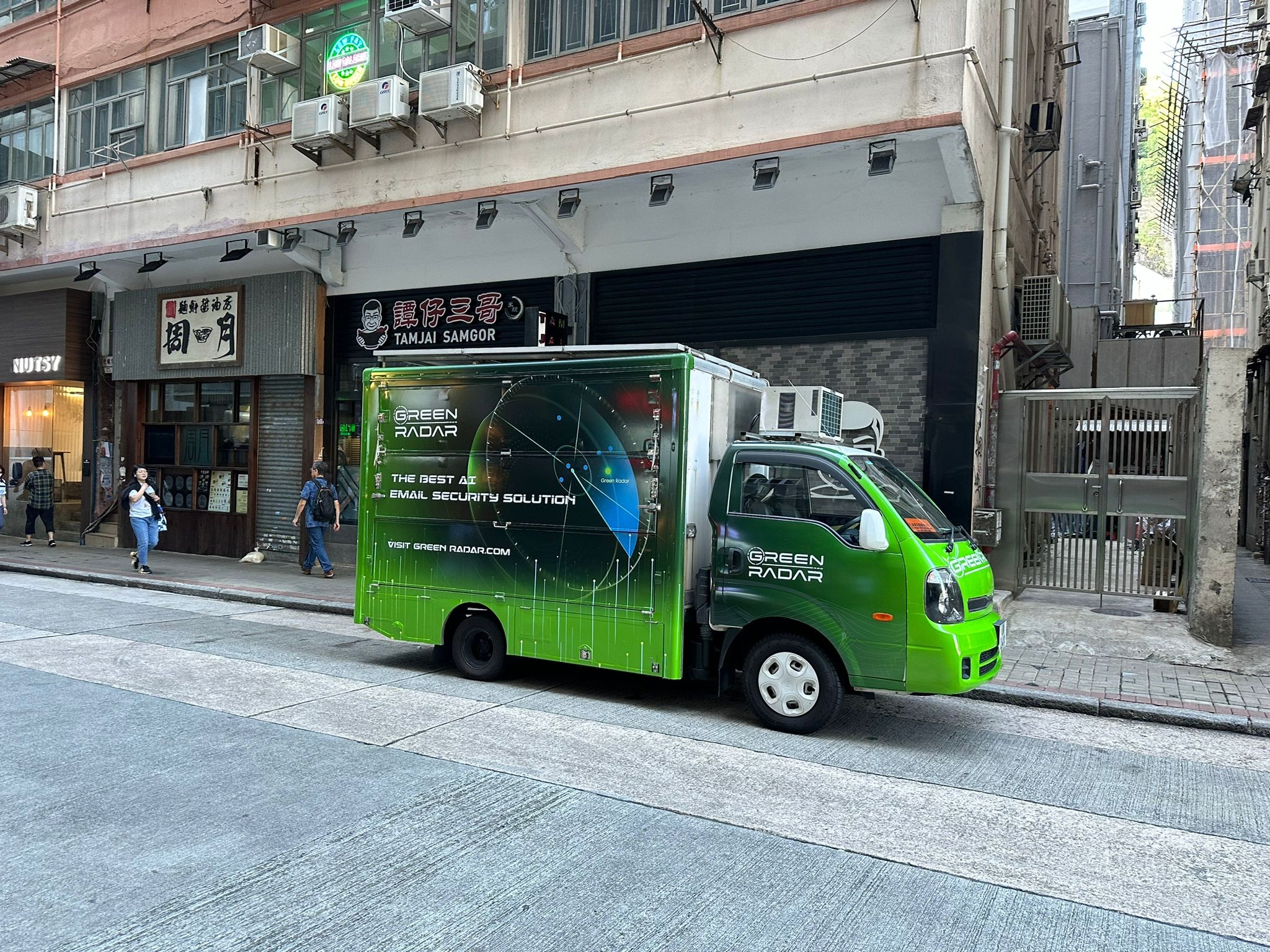
The hardest part of choosing outdoor advertising is finding a common basis. Buses charge by four weeks, MTR by two, taxis by three months and fleet size, and trucks by day. This guide compares published Hong Kong prices and shows how to calculate CPM from your own data.
1. Hong Kong OOH exposure data lacks a common standard
Why online CPM figures cannot simply be copied
Many articles omit how exposure is calculated, which footfall period is used and whether “seen” means passing, opportunity to see or actual viewing. The UK has Route and the US Geopath; Hong Kong lacks a shared, publicly audited standard, and media owners use different definitions.
For example, MTR advertising information cites about 4.9 million daily commuter journeys across the whole network, not impressions for one lightbox. Truck claims often sum route footfall without deducting repeated contacts or obstructed views.
We compare two verifiable factors
First, cost: published, traceable media prices. Second, campaign structure: minimum duration, geographic control, content changes and staffing interaction. These influence ROI potential; section four explains exposure calculations.
2. Published 2026 prices for five outdoor media
1. Bus-body advertising
Bus pricing is per vehicle per four weeks, with wide format differences. KMB has around 4,200 buses and roughly 70% market share; Citybus has around 1,700, including cross-harbour routes.
| Format | Period | Published price, HK$ |
|---|---|---|
| Seat backs, per bus | Four weeks | 2,000 – 6,000 |
| Partial body stickers | Four weeks | 3,500–8,000; other quotes reach 46,000+ depending on format and size |
| Large cross-body format | Four weeks | 14,000–15,000; another listing quotes 21,900 for the stair-position large cross format |
| Grand Panorama half-body, per bus | Four weeks | 18,000 – 35,000 |
| Mega Panorama, per bus | Four weeks | 25,000 – 45,000 |
| Super Whole Bus full wrap, per bus | Four weeks | 36,000 – 70,000 |
| Full double-decker wrap, published rate reference | Four weeks | 90,200; 155,300 including roof |
| Themed bus, full interior | Four weeks | 60,000 – 150,000 |
| Full-wrap campaign, ten or more buses | Four weeks | 92,000 – 270,000 |
Agency information puts a typical four-week bus campaign at about HK$83,000. Most table rates cover placement; printing and installation are additional.
2. MTR lightbox advertising
MTR mainly sells two-week periods, priced by station tier. Top-tier stations commonly include Causeway Bay, Tsim Sha Tsui, Central, Mong Kok, Hong Kong and Admiralty. Second-tier examples include Tsuen Wan, Ocean Park, Tai Koo and Kowloon. Premium stations are typically 20–40% above base rates.
| Format | Period | Published price, HK$ |
|---|---|---|
| 4-sheet lightbox | Two weeks | 8,000–18,000; other quotes start at 12,000 |
| 4-sheet package, weekly | One week | From 3,500 |
| 12-sheet lightbox, single station | Two weeks | 15,000–32,000; core stations add 20–40% |
| Station sticker advertising | Depends on format | 5,500 – 400,000+ |
| Overall MTR campaign | Depends on scale | From 50,000; medium/large about 170,000; station takeovers can exceed 500,000 |
Agency information gives an average MTR campaign budget of about HK$160,000, above buses. Enclosed environments, longer dwell time and concentrated audiences make it a brand-image medium.
3. Tram and taxi graphics
Trams cover only northern Hong Kong Island but have a distinctive image; signature full wraps cost around HK$130,000–220,000. Taxi campaigns typically run three months across fleets: four-door graphics cost about HK$76,383 for 30 taxis or HK$115,920 for 50, with seven to ten working days for production and installation. Relaxed taxi rules also permit roof electronic displays, full sides and parts of the rear windscreen.
4. Mobile advertising vehicle prices
Among these formats, trucks use the day as the basic unit. Published LED rates commonly range from HK$2,500–5,500 daily; rental platforms also list HK$5,500 daily, HK$35,000 weekly and HK$90,000–105,000 monthly tiers.
Rates generally include hire, driver, fuel and one return tunnel journey. Eight consecutive driver hours are common, scheduled between 10 am and 8–10 pm, with HK$200–300 hourly overtime. See Advertising vehicle hire costs in 2026 explained and Daily, weekly and monthly price references。
Published LED examples include 2.4 × 5.76 m side screens and 2.4 × 2.24 m rear screens accepting MP4/JPEG, or 2.24 × 3.52 m at 560 × 880 pixels. Confirm the actual canvas for the booked vehicle. See LED advertising truck service page。
3. Structural comparison of five OOH formats
Exposure and CPM are omitted here because inconsistent audits undermine direct comparison. These six structural factors are more useful for assessing ROI potential.
| Comparison item | Mobile advertising trucks | Bus graphics | MTR lightboxes | Tram wraps | Taxi graphics |
|---|---|---|---|---|---|
| Pricing unit | Day | Per vehicle / four weeks | Per display / two weeks | Per tram / booking period | Fleet / three months |
| Minimum period | One day | Four weeks | Two weeks | By booking period | Three months |
| Entry cost reference | From about 2,500 | From about 2,000 for seat backs | From about 3,500 for a weekly package | About 130,000 | About 76,383 for 30 taxis |
| Geographic control | Brand chooses routes and stops | Follows the bus route | Chosen station | Northern Hong Kong Island only | Uncontrolled passenger routes |
| Can content change mid-campaign? | Same-day LED updates | Costly rewrapping | Reprinting and replacement needed | Requires a new wrap | Requires a new wrap |
| Can on-site staff participate? | Yes: distribution, sampling and stage performances | No | Separate venue hire required | No | No |
The distinction: traditional OOH sells position and duration; mobile advertising sells mobility and adaptability.They complement each other. For detailed comparisons, see Mobile billboards versus fixed outdoor billboards and LED trucks versus traditional advertising vehicles。
4. Calculating CPM: formula, inputs and pitfalls
Basic formula
CPM = total campaign cost ÷ (estimated impressions ÷ 1,000). Include production costs. A wrap costs the same to produce for three or 30 days, creating very different allocated CPM. This supports LED for short hires and wraps for longer use.
Three exposure-estimation methods
- Route footfall: trucks, trams and taxis Estimate pedestrians and traffic along each section, multiply by passes and apply a consistent discount for repeat contacts and obstruction. Use the same assumptions across media.
- Venue footfall: MTR lightboxes and bus stops Multiply daily venue traffic by days and the display's visible proportion.
- Route service method: bus graphics Use daily services and footfall along the route, rather than bus passenger numbers, because external graphics primarily reach pedestrians and other road users.
Three common pitfalls
Do not equate passengers with impressions, omit production costs or use different visibility discounts to favour one medium. Apply the same assumptions and disclose them in the report.
5. What a HK$50,000 budget can buy
This is not a performance forecast, but a cost comparison using the published rates above. Figures cover placement, excluding production.
| Option | Media available within HK$50,000 | Coverage characteristics |
|---|---|---|
| A. LED mobile advertising | About nine days at 5,500/day or 20 days at 2,500/day; alternatively seven days for about 35,000, leaving 15,000 for content | Choose routes and times, split across key dates |
| B. Partial bus graphics | About six to 14 buses for four consecutive weeks at 3,500–8,000 each | Broad fixed-route coverage with repeated contact over time |
| C. MTR 12-sheet lightboxes | About one to three displays for two weeks at 15,000–32,000 each | Concentrated at selected stations with longer dwell time |
| D. Taxi fleet | Insufficient: about 76,383 for 30 taxis over three months | Increase budget or negotiate a smaller fleet |
| E. Full tram wrap | Insufficient: from about 130,000 | Increase budget |
Three cost observations follow. First, the same budget buys concentrated deployment with trucks, duration with buses and depth at MTR stations.Second, the listed taxi and tram packages exceed HK$50,000. Third, truck hire can be split across dates—for example, three days each at opening, the first weekend and month-end—while bus and MTR bookings normally run consecutively.
For opening or product-launch schedules, see A practical three-day store-opening plan and Complete promotional plan for product launches。
6. When mobile advertising is the right choice
Five situations favouring trucks
- Date-specific events: Openings, sales, launches, concerts, exhibitions and elections. Buying two to four weeks of traditional media for one day may be inefficient.
- Highly concentrated target areas: Target a shopping district, estate cluster or mall entrance directly; an MTR lightbox reaches only the nearest station.
- Frequent content changes: Time-limited offers, changing discounts and countdowns suit same-day LED updates, unlike printed wraps.
- On-site staffing: Sampling, QR gifts and performances need vehicles, staff and suitable locations. See Mobile stage truck and End-to-end event production。
- Budgets below larger traditional-media packages: SMEs can spend thousands or tens of thousands on concentrated local outreach and see a clearer response than low-frequency month-long graphics. See Ten industry use cases。
Three situations favouring traditional OOH
- Long-term branding: For three to six months of continuous presence, bus wraps or MTR lightboxes can have lower allocated unit costs than equivalent truck days.
- Categories seeking authority: Banking, insurance, property and healthcare benefit from MTR dwell time and enclosed settings for fuller messaging and brand image.
- Audiences concentrated on a commuter route: A lightbox at the station they use can be more efficient than driving around the area.
A practical mixed approach
Use traditional OOH for continuous presence and trucks on key dates. For example, keep partial bus graphics for a quarter, then add three LED days around three branches during launch week, sharing the same visuals across contexts. Compare vehicles in Five Vehicle Types Compared: A Selection Guide and LED advertising trucks versus mini promotional trucks。
7. Six ways to improve mobile advertising ROI
1. Buy the right hours, not just days
Place the standard eight consecutive hours around your audience: lunch and evening for office workers, weekend afternoons for families, evening dining for nightlife. Wrong timing wastes the same daily rate. See Routes, Timing and Coverage Strategies and our campaign guide to all 18 districts。
2. Design for the actual LED screen
Lower pixel density and moving vehicles leave viewers only seconds. Use one message, text readable at ten metres, strong contrast and no delicate lines or pale small text. Keep the QR code, phone or store-name call to action stationary.
3. Match wraps and LED to duration
One-off wraps become more economical over time. LED often costs less overall for one-to-three-day campaigns and allows same-day changes. See The complete advertising truck production process。
4. Create something worth photographing
A distinctive mobile vehicle becomes an event in itself. Vintage or pop-top vans encourage visitor photos and social sharing, extending exposure. See Vintage and T2 pop-top applications、Mini vintage van and T2 pop-top van。
5. Split the budget across phases
Instead of ten consecutive days, try three awareness days, two opening days, two first-weekend days and three month-end days. Use mobile hire's flexibility deliberately. For costs, see Short- versus long-term rental value。
6. Secure peak dates early
Book at least a week ahead, longer for design, printing and application. Lunar New Year, Christmas, New Year, major exhibitions and concerts may fill one or two months ahead with peak premiums. See Seasonal Promotional Vehicle Planning Schedule。
8. Four measurement levels and attribution
Level one: execution, verifiable
Routes, times, stops and playback lists should have objective records. Request journey and photographic evidence to verify delivery against the plan.
Level two: exposure, estimated
Use route footfall to estimate impressions and CPM. Disclose assumptions and discounts and keep them consistent across the campaign for valid comparisons.
Level three: interaction, attributable
Use dedicated QR codes, short links, vehicle-only discount codes or phone numbers to turn street contact into trackable activity matched to operating hours.
Level four: business, requiring a baseline
Compare store visits, direct website traffic, branded searches and sales with an equivalent prior period or untreated branch. Effects may lag; observe roughly two weeks after the campaign before concluding. See Hong Kong mobile advertising case studies。
Treat guaranteed ROAS claims cautiously. OOH lacks click data, so estimates depend on attribution assumptions. Establish your own baseline and tracking channels.
9. Compliance and overlooked costs
Legal requirements
Graphics must be safely fixed without obstructing vision, required lights, reflectors or registration marks. Section 5(1)(b) of Cap. 400 prohibits amplified noise causing nuisance in domestic premises or public places at any time, including vehicle speakers, without a stated decibel ceiling.
Section 52A of Cap. 374 separately regulates vehicles primarily displaying advertising and requires permits, currently issued only for non-commercial purposes. Commercial campaigns generally use normally licensed goods vehicles or vans with compliant graphics or LED, following ordinary road and parking rules. Consult the manufacturer before modifications affecting warranties or inspections. See Twenty frequently asked questions about mobile promotional vehicles。
Commonly omitted costs
- One-off sticker/wrap design, printing and application, outside daily hire
- LED visuals and video production
- Overtime beyond agreed hours, commonly HK$200–300/hour
- Extra tolls, district travel and shopping-centre/private-venue access
- Additional event staff, generators, audio and staging
- Peak premiums and weather-postponement administration
Request an itemised quotation, not just a daily total. See Ten common rental questions。
10. Frequently asked questions
What is a typical mobile advertising CPM?
There is no reliable single figure without a shared audited exposure standard. LED costs commonly run HK$2,500–5,500 daily, HK$35,000 weekly or HK$90,000–105,000 monthly. Use your route data and CPM = total cost ÷ (estimated impressions ÷ 1,000), applying the same assumptions to buses and MTR. Untraceable industry averages should not drive budgets.
Is mobile advertising cheaper than bus advertising?
It depends on duration. A truck starts around HK$2,500 for one targeted day; partial bus graphics around HK$3,500 for four weeks of fixed-route exposure. For three months or more, buses may have lower allocated unit costs. For specific dates and districts, trucks can reduce expenditure on irrelevant coverage.
Is the MTR premium worthwhile?
A 12-sheet display costs around HK$15,000–32,000 for two weeks, with core stations 20–40% higher. Campaigns commonly start at HK$50,000 and reach HK$170,000; the published average is about HK$160,000. Enclosed settings and longer dwell time suit trust-based brands and longer copy. For immediate local traffic or short offers, trucks can buy more targeted days.
Are taxi and tram adverts suitable for SMEs?
Entry costs are higher: 30 taxis with four-door graphics cost about HK$76,383 for three months, or HK$115,920 for 50, with seven to ten working days' production. Tram wraps cost HK$130,000–220,000 and cover only northern Hong Kong Island. Neither offers precise route control. Trucks better suit smaller budgets with defined dates and areas.
Should a short campaign use wraps or LED?
For one to three days, LED usually avoids physical production costs that can exceed hire charges, while allowing same-day MP4/JPEG changes. For brand tours above three weeks, full-body graphics spread production costs and provide broad visual coverage with stronger recognition than one screen.
What LED formats and dimensions are needed?
Usually MP4 or JPEG. Market examples include 2.4 × 5.76 m sides, 2.4 × 2.24 m rears and 2.24 × 3.52 m at 560 × 880 pixels. Use large, high-contrast text and simple layouts without fine lines, pale small text or excessive gradients. We provide actual canvas and safe-area specifications after vehicle confirmation and can produce content.
How can we verify the planned route was completed?
Request journey records showing routes, times and stop durations, plus photos and video. These verify delivery and provide social content. Specify deliverables and deadlines in the contract.
Can the vehicle play music or amplified sales announcements?
Audio must comply with section 5(1)(b) of Cap. 400: nuisance from amplification in domestic premises or public places at any time is unlawful, including vehicle speakers. No specific decibel ceiling is stated. Control volume, avoid homes and night use, and prioritise visuals.
How soon are outdoor-advertising effects visible?
Often with a one-to-two-week lag. Observe roughly 14 days after the campaign, comparing branded searches, direct traffic, store visits and sales with an equivalent prior period or untreated branch. Without a baseline, seasonal changes cannot be distinguished from advertising effects.
Can mobile advertising and traditional OOH run together?
Yes. Maintain baseline exposure with buses or MTR and add targeted truck activity on key dates, using shared visuals for repeated recognition. Allocate budget between sustained presence and event-specific activity to manage risk across media.
Further reading
- The 2026 mobile advertising guide for Hong Kong brands
- What is a mobile billboard? An introductory guide
- Combining stage trucks, mobile advertising and event production
- Promotion for property launches and major events
- Restaurant promotion strategies
- Advantages of mini promotional trucks
- All PEAKVEIN promotional vehicle services|Mobile showroom truck|Mini promotional truck|About us
Source
- Adintime:Hong Kong MTR and bus advertising comparison, 2026、MTR versus bus advertising prices、MTR formats and prices、Mobile advertising formats and LED specifications
- Hypertree:Hong Kong bus advertising rate card、Hong Kong MTR advertising rate card、2026 cross-channel advertising price guide
- PRO360:Hong Kong bus-wrap advertising costs
- TexWood Media:Bus-body advertising prices
- JCDecaux Ad2Go:MTR 4-sheet packages and station tiers
- Next Ads:Taxi-body advertising prices
- Exhibition King: Promotional vehicle rental inclusions; Rental King: LED daily, weekly and monthly rates
- Hong Kong legislation: Road Traffic Ordinance section 52A, restrictions on advertising vehicles; Transport Department: Vehicle alteration and modification guidance、Taxi-advertising approval criteria
Prices are public market references at writing, not formal supplier quotations. Actual charges follow quotations and contracts. Legal information is general; consult current Transport Department and Environmental Protection Department guidance for specific cases.